THE ANATOMY OF AN INFRASTRUCTURE EMPIRE’S COLLAPSE

I. Prologue: The Most Famous Name of 2025
In the history of Philippine corruption, few names have left a mark as deep as Sarah Rowena Cruz Discaya. At 49 years old, Sarah transitioned from a high-society businesswoman and mayoral candidate into the face of a PHP 31.6 billion corruption probe.
Alongside her husband, Pacifico “Curly” Discaya II, she presided over a network of construction firms that seemingly held a monopoly on the nation’s flood control budget. However, the legacy they built—cemented in the names of saints and high-end automotive engineering—crumbled in late 2025 as the waters of accountability finally rose to their doorstep.
II. Origins: The London-Pasig Connection
The story of Sarah Discaya begins in London, England, where she was born in 1976 to Filipino migrant workers. While Sarah described her upbringing as middle-class, later investigations by Vera Files suggested a more complex lineage, linking her to influential figures in Pasig. She returned to the Philippines in 2001 to pursue a business degree, initially at La Consolacion College and later at Pasig Catholic College.
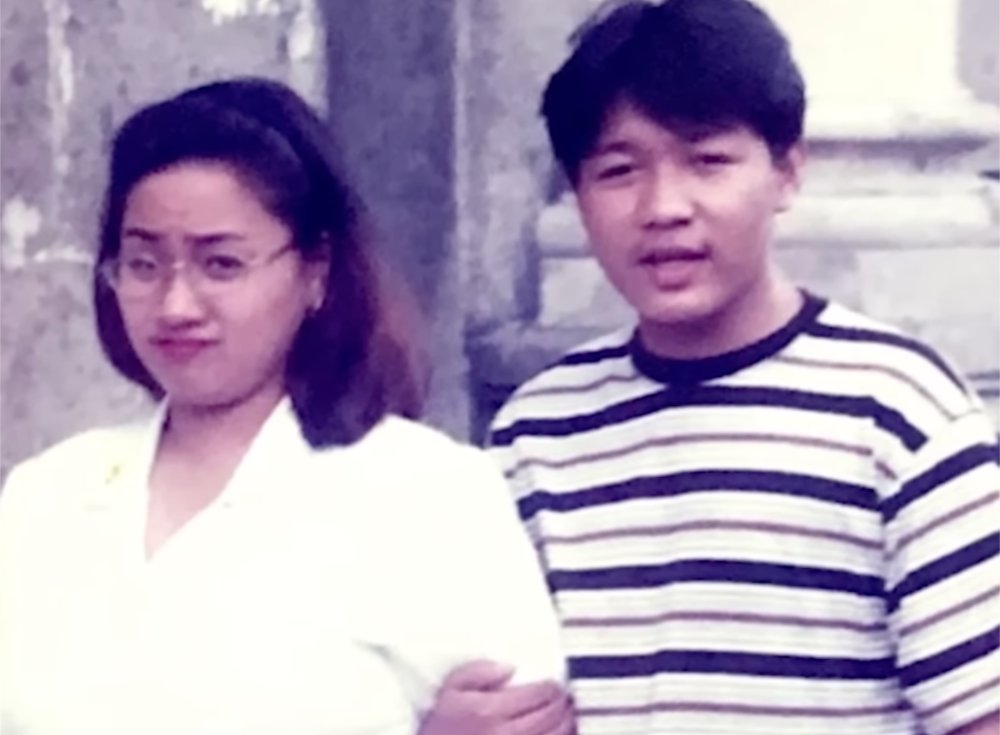
It was at Pasig Catholic College that she met Curly Discaya, a man whose background was the polar opposite of hers. Curly grew up in the floods of Manggahan, Pasig, in an informal settlement where houses lacked basic sanitation. After the de@th of his twin brother in 2006, Curly was taken in by the Immaculate Conception Cathedral, where he served as an altar boy and church janitor.
This religious background would later become a recurring theme in their corporate branding. Sarah often recounted how Curly, lacking money during their courtship, would bring her flowers taken from the altars of the church. They married in a civil ceremony in 2003, later renewing their vows in a lavish church wedding in 2016.
III. The Rise of St. Gerard and the Saintly Shield
The Discaya business empire began with St. Gerard Contractor and Development Corporation, founded in 2003 and named after their eldest son. While Sarah denied any political influence, reports persisted that her entry into the construction world was facilitated by her uncle, former Pasig Mayor Vicente Eusebio.
The couple’s growth was exponential. From a single firm, they expanded into a network of nine companies, including Alpha and Omega and St. Timothy. Their success was largely driven by PhilGEPS, the government’s electronic procurement system. By 2014, however, the first cracks appeared: St. Gerard was suspended by the DPWH for submitting a fake tax clearance.
Despite this, the firm managed to secure nine more contracts worth PHP 440 million shortly after. By 2022, the Discayas had become the undisputed “Contractor of Choice” for the DPWH, securing PHP 31.6 billion in flood control projects.
IV. The Luxury of Impunity: 40 Cars and a Mansion
As the contracts grew, so did the Discayas’ appetite for the spotlight. In late 2024 and early 2025, the couple was featured in several high-profile “Lifestyle Vlogs” by Julius Babao and Corina Sanchez. These videos, titled with themes of “Rags to Bilyonaryo,” showcased a 40-car garage filled with some of the world’s most expensive vehicles.
The collection included:
Rolls-Royce Cullinan: Estimated at PHP 42 million.
Mercedes-Maybach: Estimated at PHP 22 million.
Bentley Bentayga: Estimated at PHP 20 million.
The total value of the collection was a point of intense debate. While the Discayas claimed the cars were worth only PHP 200 million, the Bureau of Customs and media estimates placed the figure closer to PHP 500 million or even PHP 1 billion. Sarah’s justification for these purchases was famously flippant; she claimed she bought certain cars simply because she liked the built-in champagne glasses or the integrated television tables.
V. The 2025 Midterm Election and the Vico Sotto Clash
The turning point for the family’s public image was Sarah’s decision to run for Mayor of Pasig in the 2025 elections. This move placed her in direct conflict with the popular incumbent, Vico Sotto. Sotto publicly accused the Discaya firms of being a front for the return of the Eusebio political dynasty.
The campaign was defined by mutual hostility. Sotto alleged that Sarah’s companies spent millions to malign him on social media, while Sarah claimed Sotto was blocking her business operations out of spite. A significant conflict of interest was highlighted when it was revealed that St. Timothy Construction, a Discaya firm, held a contract with the COMELEC for the very election Sarah was contesting. Ultimately, Sarah suffered a crushing defeat at the polls, but the political loss was only the beginning of her legal nightmare.
VI. The SONA Revelation and the “Ghost” Davao Project
On July 28, 2025, during his State of the Nation Address, President Bongbong Marcos boasted that his administration had completed 5,500 flood control projects with an PHP 18 billion budget. However, the public reaction was one of fury, as the Philippines continued to suffer from devastating floods. This triggered a massive audit that led straight to the Discaya firms.
The most damning evidence emerged from a PHP 96.5 million flood control project in Davao Occidental. Investigators from the Office of the Ombudsman discovered that the project was a “Ghost”—it existed only in the paperwork submitted by the Discaya firm and the DPWH engineers who approved it. There was no actual structure on the ground to protect the residents from the rising waters.
VII. The Senate Hearings and the “SOP” Confession
In September 2025, Sarah and Curly were summoned to the Senate for a series of explosive hearings. Their defense was a calculated attempt to shift blame. They admitted to paying “SOPs” (Standard Operating Procedures) or kickbacks to high-ranking officials to secure their contracts.
According to their testimony, certain senators and congressmen requested commissions ranging from 10% to 25% before funds would be released. They specifically mentioned that these payments were often orchestrated under the direction of high-profile figures like Zaldy Co and approved through budget insertions by Martin Romualdez. While they portrayed themselves as “victims” of a corrupt system, the public saw them as the facilitators of that very system.

VIII. The Forensic Fall: Finger Hearts and Yellow Dresses
The legal net tightened in December 2025. The Bureau of Customs (BOC) seized 16 of the family’s luxury cars for unpaid duties and violations of import laws, later auctioning them off for PHP 38 million to recover government losses.
On December 18, the NBI received a non-bailable warrant for Sarah Discaya for Graft and Malversation of Public Funds through Falsification of Public Documents. In a scene that went viral, Sarah was seen smiling and flashing a “finger heart” sign to the media as she was processed by the NBI. Critics cited this as an indication that she did not take the investigation seriously, even as her husband Curly was already det@ined in the Senate for contempt after being caught lying about her health.
The arrest was an emotional affair. Sarah reportedly expressed fear for her four children, all of whom have ADHD and require special attention. However, the law was unmoved. After a medical checkup and mugshots, Sarah was transported to a det@ntion facility. By December 17, the Supreme Court ordered her case moved to Cebu for safety reasons, leading to her transfer to the Lapu-Lapu City Jail.
IX. Conclusion: A Cold Christmas in Cebu
As of late December 2025, the “Flood Control Queen” is spending her first Christmas behind bars, far from the luxury of her Pasig mansion and her Rolls-Royce collection. Her husband remains in Senate custody, and her firms have been shut down by the Pasig LGU.
The story of the Discayas is more than just a criminal case; it is a clinical study of how “Rags to Riches” narratives in the Philippines are often built on the pillars of systemic corruption. The PHP 31.6 billion that flowed through their accounts was supposed to keep the nation’s feet dry; instead, it fueled a lifestyle that was as extravagant as it was fraudulent.
As the trial prepares to begin in January 2026, the nation watches to see if the “Ghost Projects” will finally lead to a permanent haunting of those who thought they could buy their way out of justice.
News

Ang Mafia Boss at ang Katulong: Isang Gabi ng Pagtataksil, Pagpapasuso, at Sikretong Nagpabago sa Isang Madilim na Imperyo! Tunghayan kung paano nailigtas ng isang ina ang sanggol na hindi sa kanya sa gitna ng panganib at lupit ng Chicago Underworld.
Kabanata 1: Ang Alingawngaw sa Dilim Sa loob ng naglalakihang pader ng mansyon ni Matteo Reichi, ang pinakamabagsik na mafia…

SA LOOB NG 72 ORAS, TATLONG BALI NA RIBS, AT ISANG LUNG NA PUNO NG DUGO, NAGPANGGAP SI MIA NA OKAY LANG ANG LAHAT—HANGGANG SA BUMAGSAK SIYA SA BISIG NG PINAKAMAPANGANIB NA DEMONYO NG NEW YORK NA SI MATTEO VALENTE!
KABANATA 1: ANG PAGGUHO NG ISANG ANINO Tatlong araw. Pitumpu’t dalawang oras. Apat na libo, tatlong daan at dalawampung minuto…

Isang dukhang tagalinis, isang malupit na mafia boss, at isang maysakit na sanggol: Paano babaguhin ng isang pagkakamali ang tadhana nila sa gitna ng malamig na gabi sa New York? Tuklasin ang kuwentong magpapaiyak at magbibigay-pag-asa sa inyo sa gitna ng kadiliman at mga lihim.
Kabanata 1: Ang Bulong sa Gitna ng Unos Sa gitna ng malupit na taglamig sa New York, ang bawat hininga…

Pulis, Nagulat nang Makita ang Sariling Anak na 6-anyos na Pinahihirapan sa Gitna ng Nyebe! Ang Nakatagong Katotohanan sa Likod ng pasan-pasan niyang Kahoy ay Dudurog sa Inyong Puso at Magpapakulo ng Inyong Dugo. Isang Rebelasyong Hindi Ninyo Malilimutan!
Kabanata 1: Ang Pasabog ng Katotohanan sa Gitna ng Nyebe Sa isang abuhing hapon ng taglamig, tila bumibigat ang bawat…

HINDI SIYA DAPAT NARITO: Ang Misteryosong “Maintenance Man” na Nakatuklas sa Madilim na Lihim ng 10th Floor — Isang Makapigil-hiningang Kuwento ng Hustisya, Kapangyarihan, at ang Katotohanang Pilit Itinatago sa Likod ng mga Saradong Pintuan ng Isang Higanteng Gusali sa Pilipinas!
KABANATA 1: ANG ANINO SA DILIM NG EMPIRE Hindi siya dapat nadoon sa palapag na iyon. Ang pinto ng supply…
Isang Tawag sa Madaling-Araw: Sikretong Pag-ibig, Mafia, at ang Gabi na Nagpabago sa Lahat!
Kabanata 1: Ang Tawag sa Kalagitnaan ng Gabi Ang nakakairitang tunog ng aking cellphone ang humila sa akin mula sa…
End of content
No more pages to load