The pier of Santa Clara in Batangas City is an international gateway, vital to the nation’s economy, welcoming massive foreign vessels carrying commerce and crewmen from around the world.
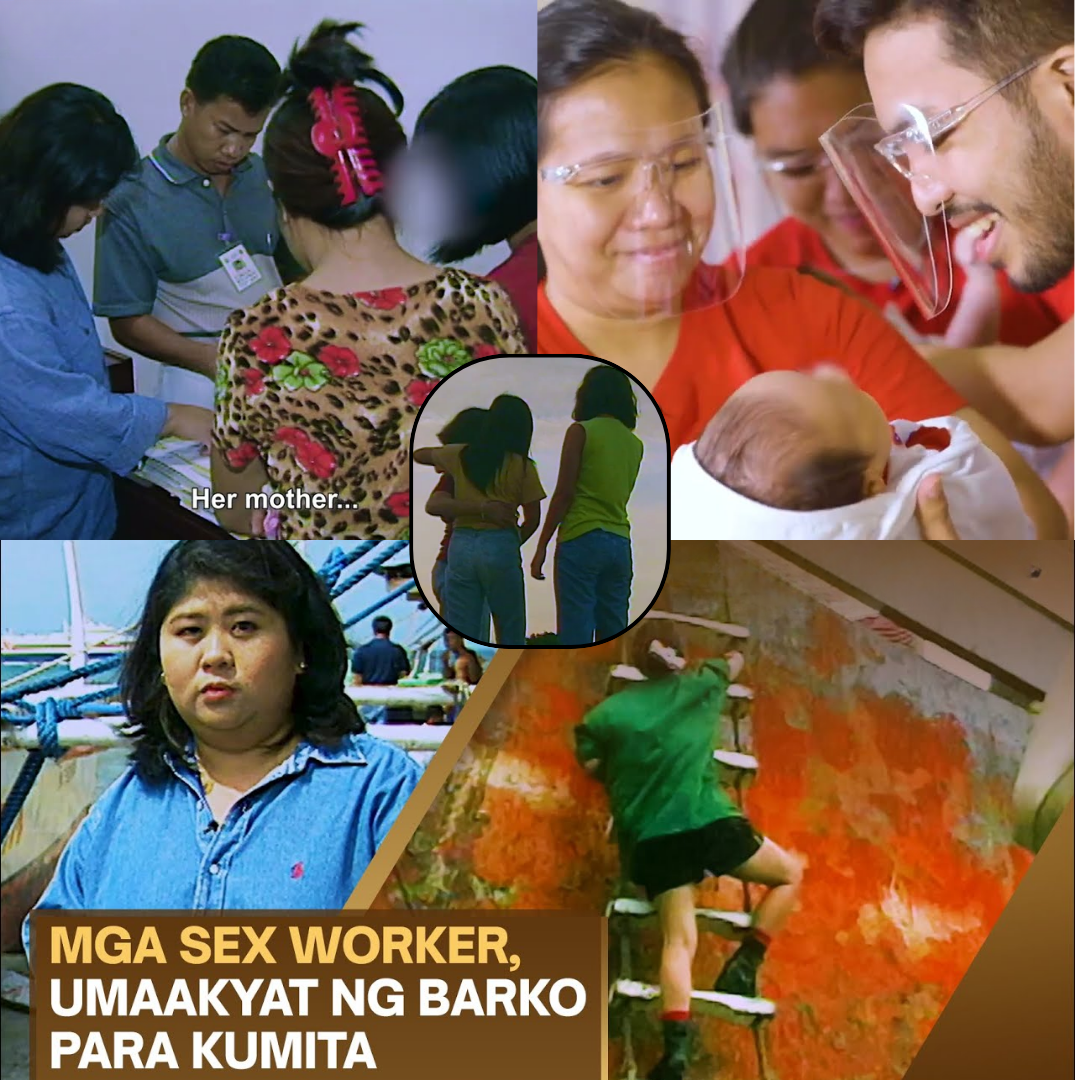
Yet, beyond the economic activity lies a shadow industry and a profound social tragedy: the lives of Filipina women known locally as “Akyat Barko” (AB)—literally, “Ship Climbers”—who board these vessels to sell intimate services.
The Dangerous Climb for Survival
The women, driven by extreme poverty (“Kahirapan”) and the need to provide for their children, navigate the dangerous waters off Santa Clara pier, using small boats to reach foreign ships that are often miles out at sea.
They face immense dangers: rough seas, near-collisions with massive tankers, and the risk of being sucked under by the ships’ powerful propellers. As one worker recounted, she was once forced to jump into the water to avoid a tanker, despite not knowing how to swim.
Their mission is stark: to sell intimate services and moments of companionship to Filipino and foreign seamen who are unable to disembark.
For workers like Beth and Joan, the dangerous ascent up the ships’ slippery rope ladders is simply part of the job. As one worker revealed, her first customer was a Korean ship captain who paid her $100 for a night of service.
The women accept the peril because, as one mother stated, she has no other viable means to feed her children.
The Architecture of Exploitation
This shadow economy is meticulously organized and protected by corruption at the port. The ABs are managed by an exploiter known as a Mamasan (like Nanay Marisa) and the boatmen.
The Mamasan acts as the broker, receiving a high commission: typically, $50 is charged per woman, of which 25% (or more) goes to the exploiter, with a percentage also allocated to the boatman for transport.
This system is lubricated by corruption. Workers confessed that corrupt port and customs officials are paid off (“lagay”) by the ship captains and Mamasans to allow the women unrestricted access to the vessels.
“No woman can board without paying the customs officials,” confessed one AB, revealing the systemic protection granted to this illegal trade.
The ABs often live with the seamen for extended periods in small cabins—known as ‘live-ins’—as a form of sustained, continuous transaction.
Trauma, Substance Abuse, and the Health Crisis
The physical and emotional toll on the ABs is catastrophic. They are constantly exposed to violence, including harassment and physical assaults. One worker recounted being assaulted and having her he@d slammed against the cabin wall by a customer when she resisted an unwanted sexual act.
The women face a severe public health crisis: a City Health Office survey revealed that only three out of ten workers use protection, leading to high rates of sexually transmitted diseases (STDs) like gonorrhea and syphilis.
For many, the physical pain is easier to manage than the emotional burden. Workers like Joy confessed that they use exploitative drugs (such as shabu) to gain the courage and emotional numbness required to endure their daily transactions.
“When you take the shabu, you become stronger, you lose fear,” explained Joy, who began this trade after surviving a severe assault on intimacy by her own father—a tragedy her mother dismissed.
The ABs also face a maternal crisis: the sale of their bodies often results in unwanted pregnancies, leading many to resort to dangerous, self-administered abortions. One worker confessed to having three such procedures, while others surrender their children for adoption to strangers, as they cannot raise them in the toxic environment.
The Vicious Cycle and the Path to Redemption
The path of the AB is often a tragic, cyclical pattern. Many women, unable to find an escape route, become Mamasans themselves, selling intimate services and companionship and recruiting new, younger girls into the trade they despise.
“I see myself in them,” confessed one Mamasan, who admitted her reluctance to continue the trade but found no other means of income.
The problem persists because authorities—the police and port officials—often target the vulnerable women rather than the customers or the corrupt system itself.
While the police occasionally arrest the women (often for minor offenses or possession of shabu), they are often released after paying bribes, while the foreign customers are immune from prosecution.
“It is unfair that only the women are arrested,” stated a community leader, noting that the city’s refusal to provide stable employment alternatives contributes directly to the problem.
Yet, hope remains. Organizations like Bilen, a drop-in center, work tirelessly to provide counseling, skills training, and alternative livelihood options for the ABs.
Their mission is not to judge but to offer choice. Workers like Beth, initially a hardened AB, found support at Bilen and was able to leave the pier, starting a new life as a seamstress in Manila.
The fight continues, with advocates urging the government to provide the necessary capital and opportunities so that the women of Santa Clara can sell something other than themselves.
News

Ang Mafia Boss at ang Katulong: Isang Gabi ng Pagtataksil, Pagpapasuso, at Sikretong Nagpabago sa Isang Madilim na Imperyo! Tunghayan kung paano nailigtas ng isang ina ang sanggol na hindi sa kanya sa gitna ng panganib at lupit ng Chicago Underworld.
Kabanata 1: Ang Alingawngaw sa Dilim Sa loob ng naglalakihang pader ng mansyon ni Matteo Reichi, ang pinakamabagsik na mafia…

SA LOOB NG 72 ORAS, TATLONG BALI NA RIBS, AT ISANG LUNG NA PUNO NG DUGO, NAGPANGGAP SI MIA NA OKAY LANG ANG LAHAT—HANGGANG SA BUMAGSAK SIYA SA BISIG NG PINAKAMAPANGANIB NA DEMONYO NG NEW YORK NA SI MATTEO VALENTE!
KABANATA 1: ANG PAGGUHO NG ISANG ANINO Tatlong araw. Pitumpu’t dalawang oras. Apat na libo, tatlong daan at dalawampung minuto…

Isang dukhang tagalinis, isang malupit na mafia boss, at isang maysakit na sanggol: Paano babaguhin ng isang pagkakamali ang tadhana nila sa gitna ng malamig na gabi sa New York? Tuklasin ang kuwentong magpapaiyak at magbibigay-pag-asa sa inyo sa gitna ng kadiliman at mga lihim.
Kabanata 1: Ang Bulong sa Gitna ng Unos Sa gitna ng malupit na taglamig sa New York, ang bawat hininga…

Pulis, Nagulat nang Makita ang Sariling Anak na 6-anyos na Pinahihirapan sa Gitna ng Nyebe! Ang Nakatagong Katotohanan sa Likod ng pasan-pasan niyang Kahoy ay Dudurog sa Inyong Puso at Magpapakulo ng Inyong Dugo. Isang Rebelasyong Hindi Ninyo Malilimutan!
Kabanata 1: Ang Pasabog ng Katotohanan sa Gitna ng Nyebe Sa isang abuhing hapon ng taglamig, tila bumibigat ang bawat…

HINDI SIYA DAPAT NARITO: Ang Misteryosong “Maintenance Man” na Nakatuklas sa Madilim na Lihim ng 10th Floor — Isang Makapigil-hiningang Kuwento ng Hustisya, Kapangyarihan, at ang Katotohanang Pilit Itinatago sa Likod ng mga Saradong Pintuan ng Isang Higanteng Gusali sa Pilipinas!
KABANATA 1: ANG ANINO SA DILIM NG EMPIRE Hindi siya dapat nadoon sa palapag na iyon. Ang pinto ng supply…

Isang Tawag sa Madaling-Araw: Sikretong Pag-ibig, Mafia, at ang Gabi na Nagpabago sa Lahat!
Kabanata 1: Ang Tawag sa Kalagitnaan ng Gabi Ang nakakairitang tunog ng aking cellphone ang humila sa akin mula sa…
End of content
No more pages to load