
On October 14, 2025, a routine academic assessment at a secondary school in Malaysia was violently transformed by an act of devastating, unprovoked violence.
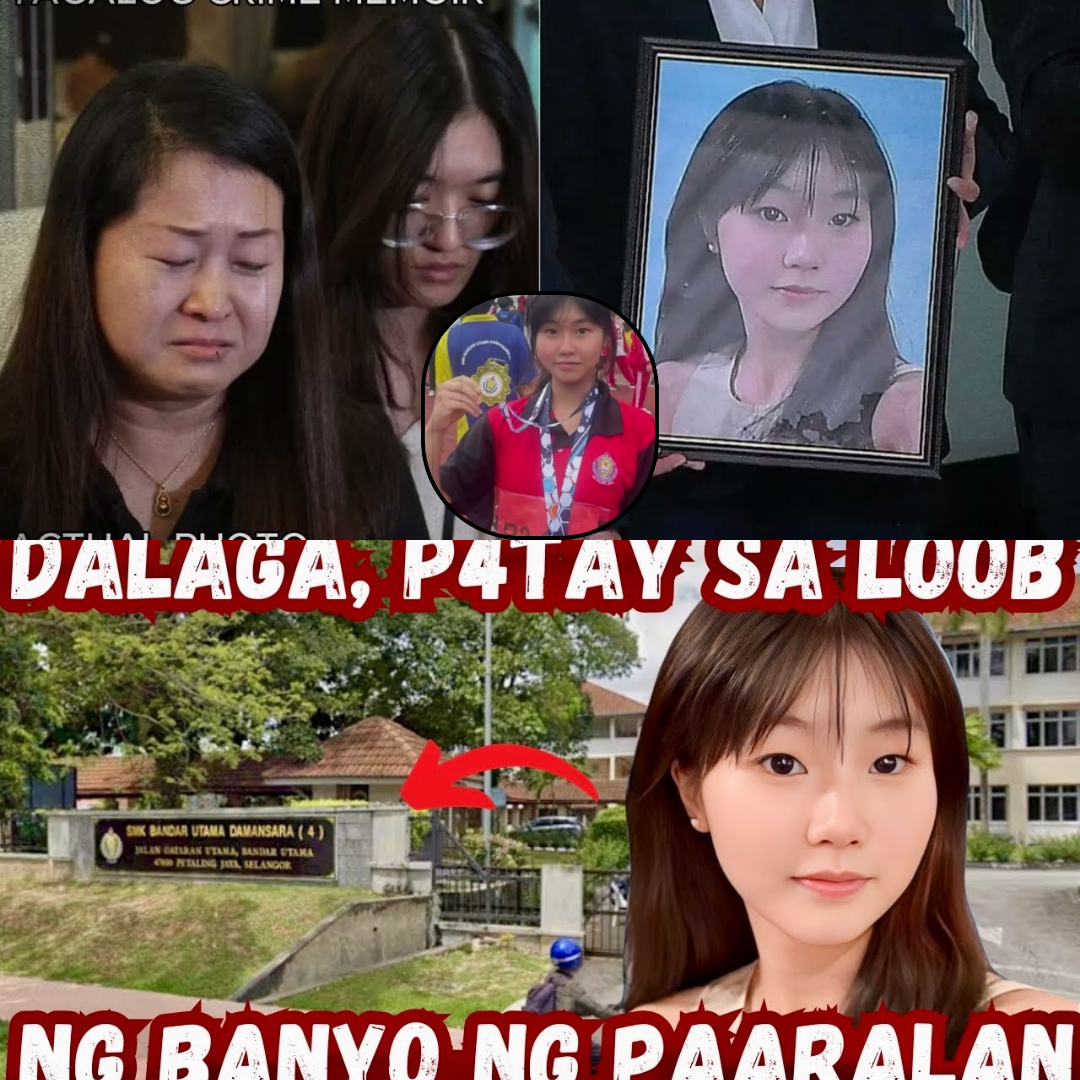
The peaceful atmosphere of the campus was replaced by screams after 16-year-old student Yap Shing Sze was fatally assaulted inside the girls’ restroom—a space meant for safety and privacy.
The Target and the Trauma
Yap Shing Sze (16) was a bright, respectful student who had worked diligently to advance her grades. Known as an organized and helpful person, Shing was also an athlete, having won awards in volleyball and badminton just days before the incident.
Her mother, Wong Li Ping, described Shing as independent, organized, and deeply affectionate—a daughter who never caused problems.
Around 9:10 AM, Shing excused herself from her exam to use the restroom on the ground floor. After approximately 20 minutes, her absence alarmed her teacher.
The teacher descended to check on her but was immediately met by a far greater danger: an armed male student was seen behaving erratically in the assembly area.
When staff finally managed to force open the locked cubicle door inside the girls’ restroom, they were confronted by a horrific scene: Shing lay on the floor, bleeding profusely, with severe wounds to her neck, chest, and legs. She was pronounced de@d at the scene.
The Profile of the Attacker
The assailant was not a stranger but a 14-year-old male student from the same school—two years younger than Shing and completely unknown to her family.
The attacker was quickly apprehended after being seen near the assembly area, carrying a bladed weapon.
The subsequent investigation revealed that the attack was a calculated act of violence, not a crime of passion. The young perpetrator was found carrying two weapons: a knife and a specialized curved blade known as a karambit, both reportedly purchased online.
The crime itself was terrifyingly complex: the assailant had locked Shing inside the cubicle before scaling the wall and assaulting her repeatedly with the two bladed weapons.
The Dark Internet Motive
The motive was quickly traced to the dark, violent content the young suspect was consuming online. Police found handwritten notes on his person containing deeply disturbing messages.
The notes referenced infamous American school shootings (the 1999 Columbine Massacre and the 2022 Uvalde Shooting) and quoted the perpetrators, Eric Harris and Dylan Klebold.
He also used phrases and quotes from violent internet subcultures, using gaming terms like “NPC” (Non-Player Character) and quotes from the anime Death Note, asserting, “Yes, I am Kira.”
Experts determined that the attack was not rooted in simple emotional conflict but in a severe psychological crisis, fueled by the internalization of online violent narratives.
The ferocity of the assault—inflicting multiple, serious physical injuries—suggested a deep, generalized rage transferred from the internet’s dark fantasies onto his innocent victim.
Legal Fate and Institutional Change
The crime, the first of its kind in Malaysia, immediately destroyed the community’s sense of security.
The 14-year-old suspect was formally charged with the unlawful taking of life. However, due to the Malaysian Child Act of 2001, he cannot be sentenced to the de@th penalty. Instead, he will be confined “at the pleasure of the Yang di-Pertuan Agong” (the monarch), meaning the length of his confinement is undetermined.
The court approved a defense request for a comprehensive psychiatric evaluation to determine his mental state during the crime. His lawyer argued that the suspect was a victim of his environment and mental health, requiring an informed judicial decision.
The tragedy forced immediate, sweeping changes at the school, which became a fortress overnight. Security was drastically tightened, with metal detectors installed at gates and daily police patrols initiated.
The heartbreaking story of Yap Shing Sze serves as a solemn warning to parents about the unseen psychological influence of dark internet subcultures and the critical need for mental health intervention before tragic fantasies turn into devastating reality.
News

Ang Mafia Boss at ang Katulong: Isang Gabi ng Pagtataksil, Pagpapasuso, at Sikretong Nagpabago sa Isang Madilim na Imperyo! Tunghayan kung paano nailigtas ng isang ina ang sanggol na hindi sa kanya sa gitna ng panganib at lupit ng Chicago Underworld.
Kabanata 1: Ang Alingawngaw sa Dilim Sa loob ng naglalakihang pader ng mansyon ni Matteo Reichi, ang pinakamabagsik na mafia…

SA LOOB NG 72 ORAS, TATLONG BALI NA RIBS, AT ISANG LUNG NA PUNO NG DUGO, NAGPANGGAP SI MIA NA OKAY LANG ANG LAHAT—HANGGANG SA BUMAGSAK SIYA SA BISIG NG PINAKAMAPANGANIB NA DEMONYO NG NEW YORK NA SI MATTEO VALENTE!
KABANATA 1: ANG PAGGUHO NG ISANG ANINO Tatlong araw. Pitumpu’t dalawang oras. Apat na libo, tatlong daan at dalawampung minuto…

Isang dukhang tagalinis, isang malupit na mafia boss, at isang maysakit na sanggol: Paano babaguhin ng isang pagkakamali ang tadhana nila sa gitna ng malamig na gabi sa New York? Tuklasin ang kuwentong magpapaiyak at magbibigay-pag-asa sa inyo sa gitna ng kadiliman at mga lihim.
Kabanata 1: Ang Bulong sa Gitna ng Unos Sa gitna ng malupit na taglamig sa New York, ang bawat hininga…

Pulis, Nagulat nang Makita ang Sariling Anak na 6-anyos na Pinahihirapan sa Gitna ng Nyebe! Ang Nakatagong Katotohanan sa Likod ng pasan-pasan niyang Kahoy ay Dudurog sa Inyong Puso at Magpapakulo ng Inyong Dugo. Isang Rebelasyong Hindi Ninyo Malilimutan!
Kabanata 1: Ang Pasabog ng Katotohanan sa Gitna ng Nyebe Sa isang abuhing hapon ng taglamig, tila bumibigat ang bawat…

HINDI SIYA DAPAT NARITO: Ang Misteryosong “Maintenance Man” na Nakatuklas sa Madilim na Lihim ng 10th Floor — Isang Makapigil-hiningang Kuwento ng Hustisya, Kapangyarihan, at ang Katotohanang Pilit Itinatago sa Likod ng mga Saradong Pintuan ng Isang Higanteng Gusali sa Pilipinas!
KABANATA 1: ANG ANINO SA DILIM NG EMPIRE Hindi siya dapat nadoon sa palapag na iyon. Ang pinto ng supply…

Isang Tawag sa Madaling-Araw: Sikretong Pag-ibig, Mafia, at ang Gabi na Nagpabago sa Lahat!
Kabanata 1: Ang Tawag sa Kalagitnaan ng Gabi Ang nakakairitang tunog ng aking cellphone ang humila sa akin mula sa…
End of content
No more pages to load