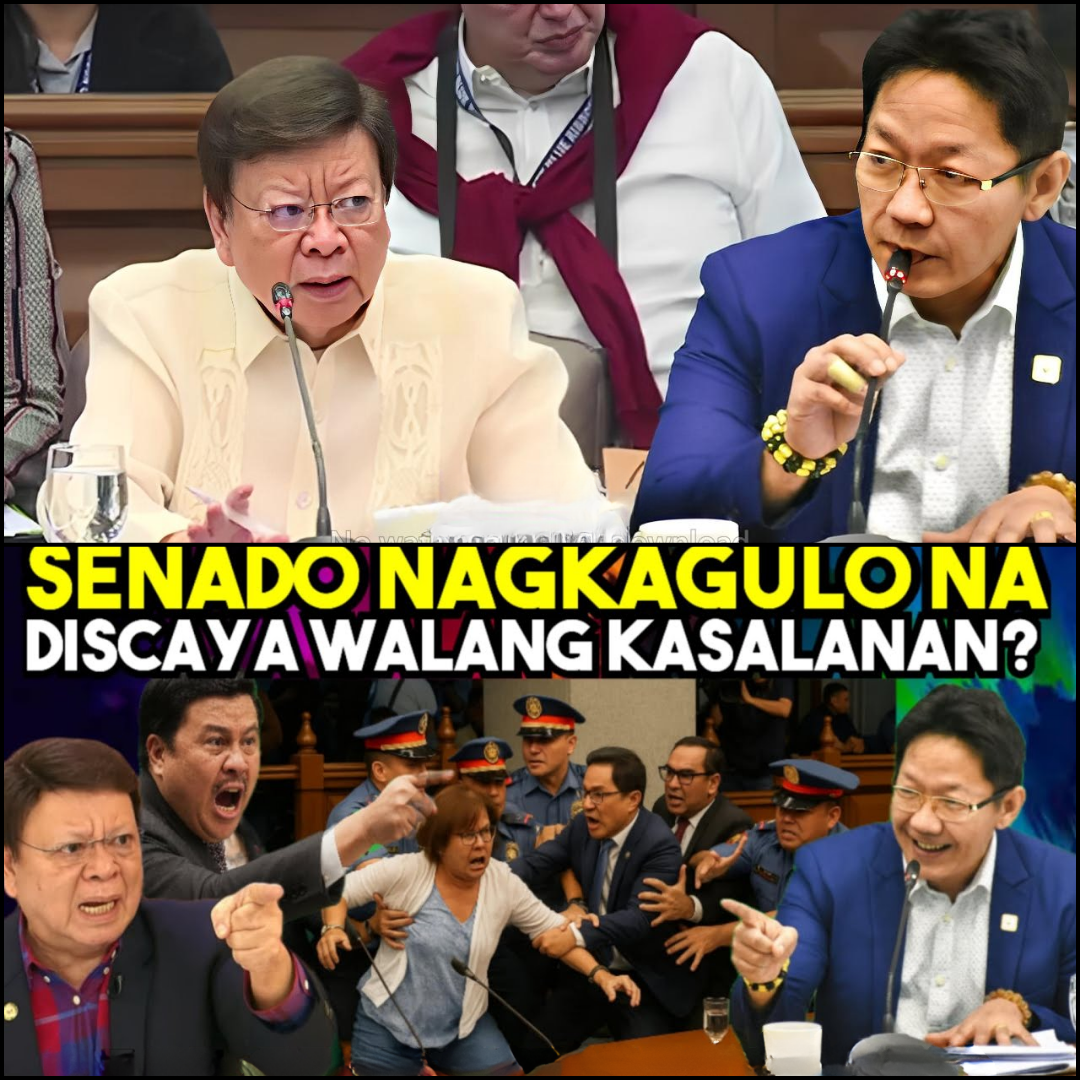
The political and economic foundation of the Philippines in early 2026 has been rocked by an earthquake of corruption allegations that threaten to dismantle the reputations of dozens of high-ranking officials. At the center of this tectonic shift are Sarah and Curly Descaya, the power couple behind a construction conglomerate that has, until recently, been the preferred partner for massive government infrastructure projects.
Their decision to turn state witness and provide a notarized, sworn statement to the Senate Blue Ribbon Committee has pulled back the curtain on a shadow economy within the government. It is a world where public safety, specifically in the form of flood control, is reportedly traded for “commissions” that range from 10 to a staggering 30 percent of the total project cost.
The Descayas’ testimony, finalized on September 6, 2025, and presented in the Senate on January 7, 2026, is perhaps the most granular look into systemic extortion ever recorded in the country. They describe a “pay-to-play” system that has become so entrenched in the Department of Public Works and Highways (DPWH) that honest bidding has become a literal impossibility for any firm.
“We were used repeatedly by those in power,” Curly Descaya stated under oath, painting a picture of a construction industry held hostage by a predatory political class. He alleged that failure to comply with the “standard 25 percent” commission would lead to “mutual termination” of projects or the manufacturing of artificial “Right of Way” issues to freeze payments.
This was not a case of a single corrupt official, but a coordinated, nationwide machinery involving “bagmen,” district engineers, and legislators from across the archipelago. The sheer volume of names mentioned in the Descaya statement has sent the House of Representatives into a state of panic, as the “resibos” or ledgers are now in the hands of the Senate.
Among the most shocking names included in the kickback list is Quezon City Representative Arjo Atayde, a prominent actor whose public image as a reformer has been severely challenged by these claims. Atayde immediately issued a blanket denial, promising to use all legal remedies to clear his name, yet the Descayas insist they have vouchers documenting cash deliveries to his associates.
The couple also named Pasig City Representative Roman Romulo and Marikina Representative Marcy Teodoro as key participants in the “commission” culture. According to the testimony, these lawmakers utilized their influence over budget “insertions” and “unprogrammed funds” to demand a cut of every project awarded in their respective districts.
The list of accused legislators continues with Uswag Ilonggo Party List Representative Jojo Ang and Quezon City Representative Patrick Michael Vargas, both alleged to have utilized intermediaries to collect cash. Even party-list representatives like Nicanor Briones of AGAP and Florida Robes of San Jose del Monte were identified as having received “commissions” through their designated “bagmen.”
The mechanics of the bribery, as described by Curly Descaya, were surprisingly professional and relied on a shadow accounting system within their construction firms. They maintained internal “ledgers” and “vouchers” that recorded the exact date, the specific project, the amount paid, and the name of the individual who received the cash.
One of the most frequent locations for these illicit exchanges was “Wine Story” in Bonifacio Global City (BGC) and the Shangri-La Mall in Mandaluyong. In these high-end, public-yet-private venues, “bagmen” like Bogs Magalong—allegedly representing Representative Marvin Rillo—would meet with the Descayas to collect large sums of cold, hard cash.
The role of the DPWH District Engineers was identified as the critical “bottleneck” in the extortion process, acting as the bridge between the legislature and the contractors. Engineers like Henry Alcantara of Bulacan and Aristotel Ramos of the First Metro District in Pasig were named as the primary enforcement officers of the kickback system.
In Pasig City, for instance, the Descayas alleged that District Engineer Aristotel Ramos demanded a 30 percent commission on flood control projects in 2025. Ramos allegedly told the contractors that this high rate was non-negotiable because the funding came directly from “unprogrammed funds” and “insertions from the top.”
This “top-down” corruption narrative points a finger at the highest leadership of the House of Representatives, with the names of Speaker Martin Romualdez and Zaldy Co frequently appearing in the testimony. The Descayas claimed that various intermediaries would justify the high 25-30 percent commission by stating that the money was “for the Speaker and for Zaldy.”
Whether these leaders were directly aware of these claims or if their names were merely used by “bagmen” to add authority to their extortion remains a central question of the Senate investigation. However, the pattern of “insertions” becoming the primary source for kickbacks suggests a structural flaw in how the national budget is designed and implemented.
The background of the Descaya family itself has become a subject of intense scrutiny, as Senator Jinggoy Estrada revealed they controlled a network of nine different construction firms. These companies, including Alpha and Omega, St. Gerard, and St. Timothy, reportedly secured over 10 billion pesos in contracts for more than 400 flood control projects between 2022 and 2024.
Estrada alleged that this “St. Family” of companies engaged in “mock bidding,” where they would pretend to compete against each other to ensure the family group won the contract. This revelation led the Philippine Contractors Accreditation Board (PCAB) to revoke the accreditation of all nine companies on January 1, 2026, effectively halting hundreds of projects nationwide.
The Descayas, however, argue that this multi-company approach was a survival strategy necessitated by the very corruption they are now exposing. They claimed that the high commission rates left them with such small profit margins that they had to increase their volume of work just to keep their equipment and staff operational.
“We were forced to absorb the losses from these kickbacks, which often led to us barely breaking even or losing money on specific projects,” Sarah Descaya explained. They remained adamant that despite the “kabawasan” or the reduction in funds taken by politicians, they never compromised on the quality of the materials or the engineering specifications.
This claim is now being tested by the Senate, as they order a technical audit of the 400+ projects to ensure that the “25 percent standard” didn’t lead to “ghost projects” or substandard infrastructure. If the projects are found to be deficient, it would mean that the corruption didn’t just steal money—it actively endangered the lives of Filipinos who rely on these flood control systems.
The human cost of this systemic failure is most evident during the typhoon season, when billions of pesos in infrastructure “accomplishments” fail to prevent massive flooding in urban centers. The “25 percent” taken by a politician is money that could have gone toward deeper drainage, stronger sea walls, or better relocation programs for vulnerable residents.
The Senate Blue Ribbon Committee, under the leadership of Senator Rodante Marcoleta, is now moving to subpoena the actual “ledgers” and bank records of the Descaya conglomerate. If these documents correlate with the dates of cash withdrawals and the movements of the named “bagmen,” the legal fallout will be unprecedented in Philippine history.
The list of “bagmen” and intermediaries is extensive, including names like Dian Tan and Andrew, who reportedly collected for former Undersecretary Terence Calatrava. It also includes DPWH officials like Undersecretary Robert Bernardo and Director Ramon Ariola III, who were allegedly involved in the collection process for region-wide projects.
The Descayas have expressed a willingness to become “State Witnesses,” seeking immunity in exchange for providing the definitive evidence needed to convict the “big fish” in the government. This has put Senate President Francis “Chiz” Escudero in a delicate position, balancing the need for justice with the reality that the whistleblowers themselves are part of the bid-rigging system.
The “mutual termination” threat mentioned in the testimony is a particularly dark aspect of the DPWH culture, where a contractor’s refusal to pay can result in their professional destruction. By manufacturing “Right of Way” issues or simply refusing to sign off on material tests, corrupt officials can bankrupt a firm that tries to operate with integrity.
This atmosphere of fear is what allowed the “commission” system to flourish for so long, as contractors were forced to choose between participating in corruption or losing their livelihood. The Descayas’ decision to “blow the whistle” suggests that the system has reached a breaking point, where the demands of the politicians have finally exceeded the ability of the firms to pay.
The 2026 “Infrastructure War” is not just about these two whistleblowers; it is a battle for the soul of the Department of Public Works and Highways. If the Senate cannot bring about a genuine cleanup of the “insertion” system, the multi-trillion peso national budget will continue to be a personal bank account for the political elite.
The involvement of “unprogrammed funds” in these kickbacks is a critical area of concern for fiscal reformers, as these funds lack the rigorous oversight of the regular budget items. As President Marcos Jr. promises a “corruption-free” budget for 2026, the investigation into the 2024 and 2025 cycles serves as a grim reminder of how deep the rot actually goes.
The public reaction to the Descayas’ testimony has been a mix of anger, cynicism, and a desperate hope for real change in the way the country is governed. For the average taxpayer, the “25 percent” represents a theft of their future, a betrayal by the very representatives who claim to be working for their welfare in the House.
The inclusion of the “Wine Story” and “BGC” locations in the testimony has added a layer of “socialite corruption” that resonates with a public that is struggling with high inflation. While ordinary Filipinos wait in line for cash assistance, their leaders are allegedly drinking expensive wine while their “bagmen” collect millions of pesos in illegal commissions.
The legal defense for the named lawmakers is expected to rely on discrediting the Descayas by highlighting their own “mock bidding” and “bid-rigging” activities. They will argue that the whistleblowers are merely “disgruntled contractors” who are lashing out after their accreditation was revoked by the PCAB.
However, the “State Witness” gambit is powerful precisely because it utilizes the testimony of those who were “inside the room” when the crimes were committed. If the Descayas can provide a single video, a recording, or a bank transfer that links a “bagman” to a lawmaker, the defense of “denial” will crumble under the weight of evidence.
The 10 billion pesos in contracts awarded to the Descaya group is a massive sum, but it is only a fraction of the total infrastructure spending of the Philippine government. If the “25 percent standard” applies to even half of the nation’s projects, the amount of money stolen from the public treasury every year is truly astronomical.
This corruption is the primary reason why Philippine infrastructure projects are often among the most expensive in Southeast Asia while being among the lowest in quality. The “kickback tax” is a hidden burden that every Filipino pays, reflected in the potholes on the roads and the broken dikes in the provinces after a storm.
The Senate’s role in this investigation is a crucial test of the “check and balance” system between the upper and lower houses of the Philippine legislature. With many of the accused being members of the House, the Senate must prove that it can conduct an impartial inquiry that prioritizes the truth over political alliances.
Senator Raffy Tulfo’s line of questioning regarding the “advance payments” highlights a particularly predatory aspect of the scheme, where contractors are forced to pay before the work even begins. This means that contractors often start projects in a financial deficit, which creates an even greater incentive to cut corners on safety and material quality just to stay afloat.
The “vouchers” and “ledgers” that the Descayas have promised to turn over could be the most important documents in the history of Philippine anti-corruption efforts. They represent a “paper trail” in a system that has traditionally relied on “cash-only” transactions and verbal agreements to avoid the prying eyes of the Commission on Audit.
The 2026 budget cycle, which has just begun, will be defined by the “Descaya Files,” as legislators are forced to defend their “insertions” in the light of these new allegations. The “magic tricks” of the budget that Chavit Singson and now the Descayas have exposed are no longer just whispers; they are now part of the public record.
The future of the Philippine construction industry depends on whether this investigation leads to a genuine reform of the bidding process and the removal of the “bagman” system. We must move toward a fully digital, transparent, and audited system where every peso spent on infrastructure is tracked from the National Treasury to the actual concrete on the ground.
The Descayas have taken a massive risk by coming forward, but they have also given the Filipino people a rare opportunity to demand a total overhaul of the DPWH. Whether their motives are pure or purely for survival, the information they have provided is a weapon that can be used to fight for a cleaner and more honest government.
The “resibos” are being copied, the “bagmen” are being identified, and the “Kings of Allocables” are finally feeling the heat of public scrutiny. The struggle for accountability in the Philippines is a marathon, not a sprint, and the “Descaya Files” represent a critical mile in the race toward a better country.
We must stay vigilant and demand that the Senate Blue Ribbon Committee follows the evidence wherever it leads, regardless of the political names involved in the scheme. The “25 percent” belongs to the people, and it is time that every peso of it is returned to the public service where it was originally intended to go.
Justice for the Filipino taxpayer is the ultimate goal, and the exposure of the “Infrastructure Mafia” is the first step in reclaiming the nation’s treasury from those who treat it as their own. As the hearings continue through 2026, the people will be watching, waiting for the “big fish” to finally face the consequences of their betrayal of the public trust.
The story of the 10 billion peso kickback scheme is a tragic chapter in our history, but it is also a chance to write a new, more transparent chapter for the future. Let us ensure that the “Angel of the House” and the “Kings of Allocables” are replaced by leaders who value integrity over “commissions” and service over “kickbacks.”
The “smokescreen” of budget insertions and unprogrammed funds has been cleared, and what lies beneath is a reality that every Filipino must confront with courage and determination. This is the mission of our generation: to end the “magic” in the budget and ensure that the wealth of the nation actually reaches the hands of those who need it most.
Stay informed, stay involved, and never stop demanding the “resibos” from those who claim to lead us in the halls of power and the offices of the bureaucracy. The truth has a way of outlasting even the most sophisticated corruption scheme, and in 2026, the truth is finally beginning to find its voice in the Philippine Senate.
The fight against the “DPWH Mafia” is a fight for the very survival of our national infrastructure and the safety of every family living in a flood-prone area. Every “ghost project” and every “substandard” bridge is a monument to the corruption that the Descayas have exposed, and it is our duty to ensure these monuments are torn down.
As the 2026 budget implementation begins, let the shadow of this investigation serve as a warning to those who are still looking for a “kickback” in the next project. The era of “now you see it, now you don’t” is coming to an end, as the Filipino people demand to see exactly where their trillions of pesos are going.
We will continue to follow the “Descaya Files” and the Senate hearings, providing the deep-dive analysis and the granular details that the public needs to stay awake. Justice for the Philippines is not just a dream; it is a necessity that we must work for every single day against the forces of greed and systemic betrayal.
The 1.29 billion DOH fund, the missing 74 billion of PhilHealth, and now the 10 billion peso DPWH kickback scheme—all of these are pieces of a single, massive puzzle. When the puzzle is complete, the picture will be one of a nation that has been robbed but is finally finding the strength to take back what is rightfully its own.
May this investigation lead to a new dawn of transparency and a government that is truly for the people, by the people, and accountable to the people in every peso it spends. The “Infrastructure War” of 2026 has just begun, and we will be there to document every victory for the truth and every defeat for the “Kings of Allocables.”
The “resibos” are on the table, the witnesses are ready to testify, and the “magicians” are running out of tricks as the light of justice shines brighter than ever before. Stay alert, stay connected, and never forget that your voice and your vigilance are the ultimate weapons against the corruption that has plagued our land for far too long.
The story of the billion-peso kickback scheme is our story, and the ending is something that we, the Filipino people, will decide through our demand for absolute and total accountability. The journey is difficult, but the destination—a clean, honest, and prosperous Philippines—is worth every struggle and every revelation that comes from the “Descaya Files.”
News

Ang Mafia Boss at ang Katulong: Isang Gabi ng Pagtataksil, Pagpapasuso, at Sikretong Nagpabago sa Isang Madilim na Imperyo! Tunghayan kung paano nailigtas ng isang ina ang sanggol na hindi sa kanya sa gitna ng panganib at lupit ng Chicago Underworld.
Kabanata 1: Ang Alingawngaw sa Dilim Sa loob ng naglalakihang pader ng mansyon ni Matteo Reichi, ang pinakamabagsik na mafia…

SA LOOB NG 72 ORAS, TATLONG BALI NA RIBS, AT ISANG LUNG NA PUNO NG DUGO, NAGPANGGAP SI MIA NA OKAY LANG ANG LAHAT—HANGGANG SA BUMAGSAK SIYA SA BISIG NG PINAKAMAPANGANIB NA DEMONYO NG NEW YORK NA SI MATTEO VALENTE!
KABANATA 1: ANG PAGGUHO NG ISANG ANINO Tatlong araw. Pitumpu’t dalawang oras. Apat na libo, tatlong daan at dalawampung minuto…

Isang dukhang tagalinis, isang malupit na mafia boss, at isang maysakit na sanggol: Paano babaguhin ng isang pagkakamali ang tadhana nila sa gitna ng malamig na gabi sa New York? Tuklasin ang kuwentong magpapaiyak at magbibigay-pag-asa sa inyo sa gitna ng kadiliman at mga lihim.
Kabanata 1: Ang Bulong sa Gitna ng Unos Sa gitna ng malupit na taglamig sa New York, ang bawat hininga…

Pulis, Nagulat nang Makita ang Sariling Anak na 6-anyos na Pinahihirapan sa Gitna ng Nyebe! Ang Nakatagong Katotohanan sa Likod ng pasan-pasan niyang Kahoy ay Dudurog sa Inyong Puso at Magpapakulo ng Inyong Dugo. Isang Rebelasyong Hindi Ninyo Malilimutan!
Kabanata 1: Ang Pasabog ng Katotohanan sa Gitna ng Nyebe Sa isang abuhing hapon ng taglamig, tila bumibigat ang bawat…
HINDI SIYA DAPAT NARITO: Ang Misteryosong “Maintenance Man” na Nakatuklas sa Madilim na Lihim ng 10th Floor — Isang Makapigil-hiningang Kuwento ng Hustisya, Kapangyarihan, at ang Katotohanang Pilit Itinatago sa Likod ng mga Saradong Pintuan ng Isang Higanteng Gusali sa Pilipinas!
KABANATA 1: ANG ANINO SA DILIM NG EMPIRE Hindi siya dapat nadoon sa palapag na iyon. Ang pinto ng supply…
Isang Tawag sa Madaling-Araw: Sikretong Pag-ibig, Mafia, at ang Gabi na Nagpabago sa Lahat!
Kabanata 1: Ang Tawag sa Kalagitnaan ng Gabi Ang nakakairitang tunog ng aking cellphone ang humila sa akin mula sa…
End of content
No more pages to load