THE ARCHITECT OF THE JAMAHIRIYA
I. Prologue: The Bedouin Boy
Libya’s history was forever altered in 1942, in a desert tent near Sirte. Muammar Gaddafi was born into the Kadhadfa tribe, a family of nomadic Bedouins.
He was the only son to survive, and his father made the arduous sacrifice to send him to school in the city. There, Gaddafi felt the sting of discrimination from urban Libyans, an experience that fueled his lifelong resentment of the elite and his radicalization.
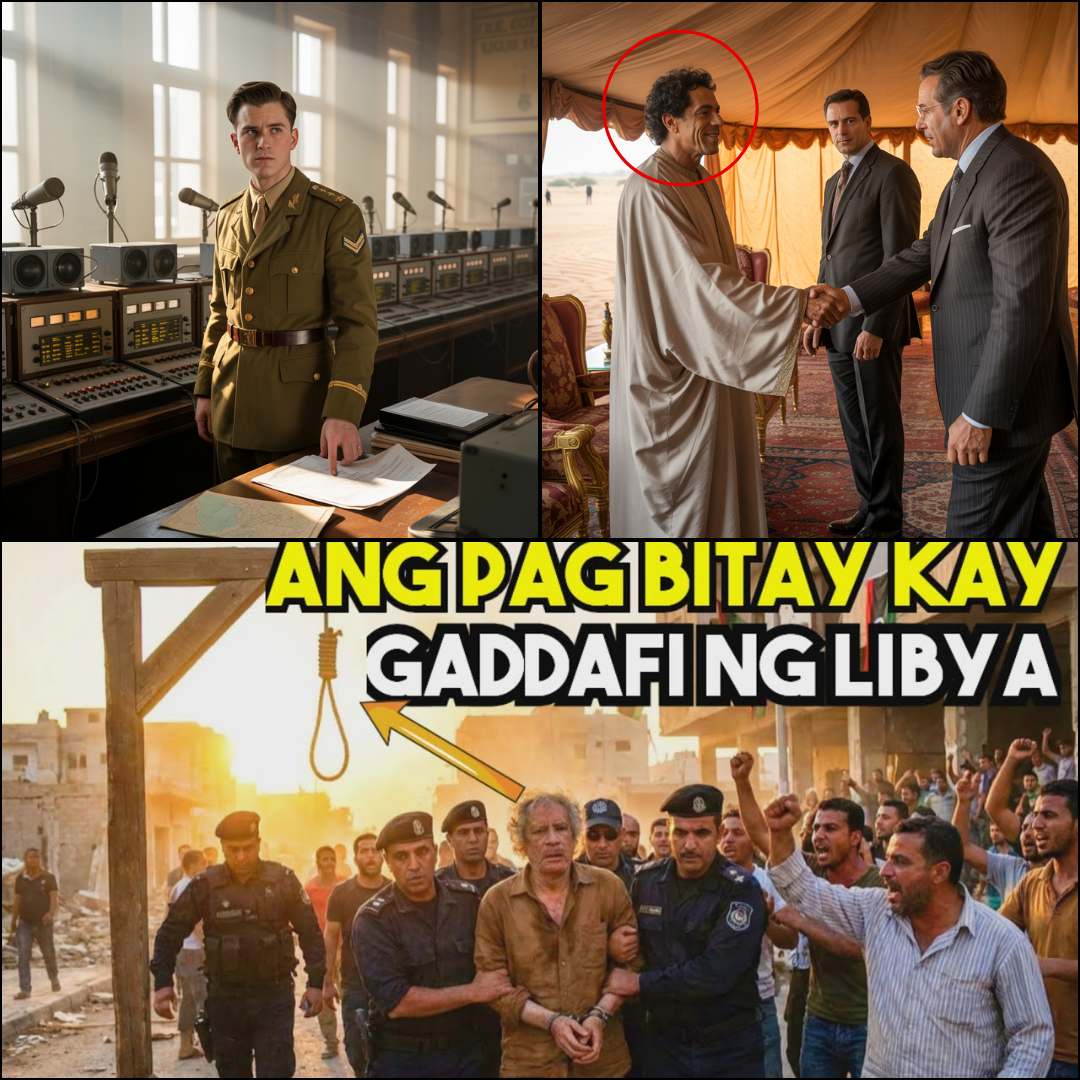
As a teenager, he listened to the Voice of the Arabs radio from Cairo. He became obsessed with Gamal Abdel Nasser, the Egyptian leader who had overthrown a monarchy. Gaddafi saw himself as Nasser’s successor—a champion of Pan-Arabism and a foe of Western imperialism.
II. The Free Officers and Operation Jerusalem
Gaddafi realized that in a monarchy like King Idris’s Libya, the only path to power was the military. In 1961, he entered the Royal Military Academy in Benghazi. While other cadets focused on drills, Gaddafi focused on recruitment. He formed the Free Officers Movement, a secret cell of junior officers committed to revolution.
On September 1, 1969, while King Idris was away in Turkey for medical treatment, Gaddafi launched Operation Jerusalem. It was a masterclass in tactical coordination:
The Blackout: Using his signals training, Gaddafi’s team cut the phone lines across the country, paralyzing the senior military leadership.
The Takeover: Tanks surrounded the palaces and police stations. By 6:30 AM, Gaddafi walked into the Benghazi radio station.
The Proclamation: At 27 years old, the unknown Captain declared the end of the monarchy. It was a bl00dless coup that the public, tired of foreign influence, initially cheered.
III. The Jamahiriya and The Green Book
Gaddafi did not want to be a conventional president. In 1975, he published The Green Book, which outlined his “Third Universal Theory”—a rejection of both Western Capitalism and Soviet Communism.
In 1977, he renamed the country the Great Socialist People’s Libyan Arab Jamahiriya. Jamahiriya was a word he coined, meaning “State of the Masses.”
The Façade of Democracy: Technically, there was no government. Power supposedly rested in thousands of People’s Congresses. Gaddafi took the title “Brother Leader and Guide of the Revolution.” Because he held no official government post, he claimed he could not be removed or impeached.
The Reality of Terror: Behind the “People’s Power” were the Revolutionary Committees. These were Gaddafi’s enforcers. They monitored every neighborhood, arrested dissidents without warrants, and conducted “People’s Trials” broadcast live on TV.
The most infamous was the 1984 public hanging of students in a Benghazi basketball court—a clear message that the Brother Leader’s “guidance” was mandatory.
IV. Oil Wealth and International Pariah Status
Gaddafi used Libya’s massive oil reserves to transform the country. Libyans enjoyed:
Free Education and Healthcare.
Marriage Grants: The government provided $50,000 to newlywed couples for apartments.
Cheap Energy: Gasoline was cheaper than bottled water.
However, Gaddafi’s foreign policy made him “The Mad Dog of the Middle East,” as Ronald Reagan called him. He was linked to the 1986 Berlin disco bombing and the 1988 Lockerbie bombing (Pan Am Flight 103). Libya was hit with crushing UN sanctions, leading to years of international isolation.
In a surprising pivot after the 2003 fall of Saddam Hussein, Gaddafi feared he was next. He struck a deal with the West, surrendering his Weapons of Mass Destruction (WMD) program and paying billions in compensation for Lockerbie. In exchange, sanctions were lifted, and leaders like Tony Blair visited his Bedouin tent in Tripoli.
V. The Arab Spring and the Siege of Benghazi
The “Golden Age” of Gaddafi’s renewed relationship with the West was short-lived. In February 2011, inspired by revolutions in Tunisia and Egypt, Benghazi exploded in protest.
Gaddafi’s response was not reform, but total war. In a famous “Zenga Zenga” speech, he vowed to “cleanse Libya inch by inch, house by house.” He deployed tank brigades to Benghazi, threatening a massacre. This triggered UN Resolution 1973, authorizing NATO air strikes to protect civilians.
NATO’s intervention turned the tide. For six months, Libyan rebels—a ragtag army of civilians—pushed toward Tripoli with Western air support. By August 2011, the capital fell, and Gaddafi fled to his hometown of Sirte.
VI. The Final Stand in Sirte (October 20, 2011)
By October, Sirte was a ruin. Gaddafi, his son Mutassim, and a few loyalists were cornered in a shrinking district. On the morning of October 20, they attempted a desperate breakout in a convoy of 75 vehicles.
The NATO Strike: A US Predator drone and French fighter jets detected the convoy. A Hellfire missile struck the lead vehicles, turning the road into a corridor of fire. Gaddafi, wounded by shrapnel, crawled into a concrete drainage pipe under the highway to hide.
The Capture: Rebel fighters from Misrata found him. Cellphone videos captured the chaotic, br*tal final moments:
The Humiliation: Gaddafi was dragged out, covered in bl00d and dust. The mob beat him and stabbed him with a bayonet.
The Execution: Amidst screams of “Allahu Akbar,” Gaddafi was sh0t in the stomach and head.
The Trophy: A rebel was seen brandishing Gaddafi’s famous golden-plated Browning pistol.
VII. The Meat Freezer Aftermath
In an final indignity, Gaddafi’s b0dy was not given to his family or taken to a m0rgue. It was transported to Misrata and placed in a commercial meat freezer inside a shopping center. For four days, thousands of Libyans queued up to view the corpse, taking selfies with the fallen dictator as if he were a tourist attraction.
On October 25, 2011, his b0dy was taken deep into the Sahara Desert and buried in an unmarked grave. The National Transitional Council refused to disclose the location to prevent it from becoming a shrine for loyalists.
VIII. Conclusion: A Divided Legacy
Muammar Gaddafi’s 42-year rule ended in the same dirt he was born in. He left behind a Libya with modern infrastructure and high literacy rates, but also a country without institutions, fractured by tribalism and traumatized by decades of surveillance.
His fall serves as a definitive lesson on the fragility of autocracy. No amount of oil wealth or “People’s Congresses” could protect him when the fear that held his country together finally turned into a fever for revenge. Gaddafi began as a voice for the Bedouin masses; he ended as a b0dy in a freezer, a warning to every “King of Kings” that power without justice is an invitation to a violent end.
News

Ang Mafia Boss at ang Katulong: Isang Gabi ng Pagtataksil, Pagpapasuso, at Sikretong Nagpabago sa Isang Madilim na Imperyo! Tunghayan kung paano nailigtas ng isang ina ang sanggol na hindi sa kanya sa gitna ng panganib at lupit ng Chicago Underworld.
Kabanata 1: Ang Alingawngaw sa Dilim Sa loob ng naglalakihang pader ng mansyon ni Matteo Reichi, ang pinakamabagsik na mafia…

SA LOOB NG 72 ORAS, TATLONG BALI NA RIBS, AT ISANG LUNG NA PUNO NG DUGO, NAGPANGGAP SI MIA NA OKAY LANG ANG LAHAT—HANGGANG SA BUMAGSAK SIYA SA BISIG NG PINAKAMAPANGANIB NA DEMONYO NG NEW YORK NA SI MATTEO VALENTE!
KABANATA 1: ANG PAGGUHO NG ISANG ANINO Tatlong araw. Pitumpu’t dalawang oras. Apat na libo, tatlong daan at dalawampung minuto…

Isang dukhang tagalinis, isang malupit na mafia boss, at isang maysakit na sanggol: Paano babaguhin ng isang pagkakamali ang tadhana nila sa gitna ng malamig na gabi sa New York? Tuklasin ang kuwentong magpapaiyak at magbibigay-pag-asa sa inyo sa gitna ng kadiliman at mga lihim.
Kabanata 1: Ang Bulong sa Gitna ng Unos Sa gitna ng malupit na taglamig sa New York, ang bawat hininga…
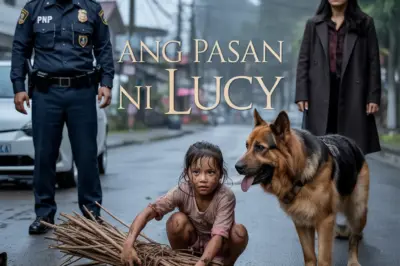
Pulis, Nagulat nang Makita ang Sariling Anak na 6-anyos na Pinahihirapan sa Gitna ng Nyebe! Ang Nakatagong Katotohanan sa Likod ng pasan-pasan niyang Kahoy ay Dudurog sa Inyong Puso at Magpapakulo ng Inyong Dugo. Isang Rebelasyong Hindi Ninyo Malilimutan!
Kabanata 1: Ang Pasabog ng Katotohanan sa Gitna ng Nyebe Sa isang abuhing hapon ng taglamig, tila bumibigat ang bawat…
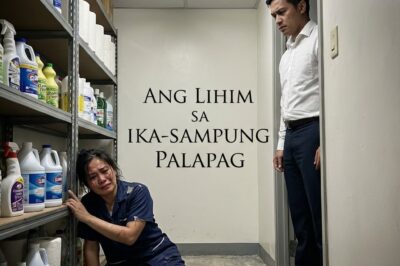
HINDI SIYA DAPAT NARITO: Ang Misteryosong “Maintenance Man” na Nakatuklas sa Madilim na Lihim ng 10th Floor — Isang Makapigil-hiningang Kuwento ng Hustisya, Kapangyarihan, at ang Katotohanang Pilit Itinatago sa Likod ng mga Saradong Pintuan ng Isang Higanteng Gusali sa Pilipinas!
KABANATA 1: ANG ANINO SA DILIM NG EMPIRE Hindi siya dapat nadoon sa palapag na iyon. Ang pinto ng supply…

Isang Tawag sa Madaling-Araw: Sikretong Pag-ibig, Mafia, at ang Gabi na Nagpabago sa Lahat!
Kabanata 1: Ang Tawag sa Kalagitnaan ng Gabi Ang nakakairitang tunog ng aking cellphone ang humila sa akin mula sa…
End of content
No more pages to load