
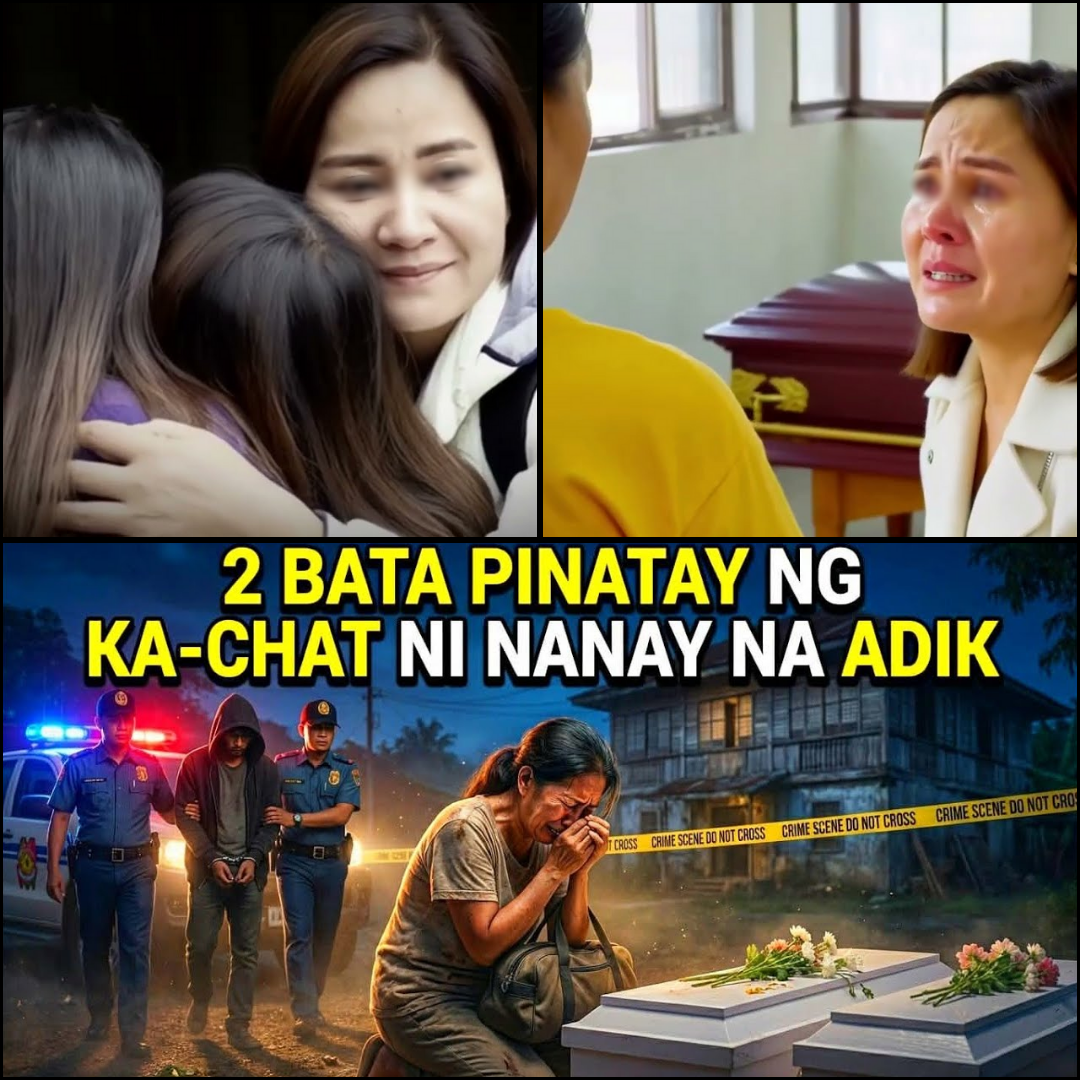
The journey of an Overseas Filipino Worker (OFW) is often characterized by sacrifice, longing, and the singular goal of building a better future for their children. For Elena, a domestic helper who spent three years enduring the isolation of Saudi Arabia, that dream was shattered on November 11, 2025.
Instead of the warm embrace of her daughters upon her return, she was met by two white coffins in Barangay Darong, Santa Cruz, Davao del Sur. The victims, 15-year-old Ria and 11-year-old Mia, were found lifeless inside their own home—a sanctuary that had been breached by a man who was supposed to be their protector.
The tragedy began not in the physical world, but in the digital one. Three months prior to the incident, Elena met a man named Mark on Facebook. Mark, who worked at a nearby cement factory, quickly gained Elena’s trust through consistent communication and apparent kindness toward her children.
In the absence of a father figure, Elena saw Mark as a helping hand. She allowed him access to her home, believing his presence would provide security for her daughters while their grandmother, Aling Rosa, acted as their primary guardian.
This decision, born out of a mother’s desire to have someone “on the ground” to look after her girls, would eventually become the catalyst for an unthinkable crime.
The relationship between Elena and Mark was initially built on the illusion of care. Mark would visit the house, bring snacks, and check on the girls’ schoolwork. However, the dynamic shifted as Mark began to view Elena not as a partner, but as a financial resource.
The tension escalated when Mark demanded 12,000 pesos, claiming he had “advanced” money for the girls’ expenses. When Elena, suspicious of the sudden demand and acting on advice from Mark’s own father, decided to send the money to Mark’s family instead of directly to him, the “father figure” persona evaporated. A series of heated exchanges followed, culminating in a chilling threat from Mark: “You’ve crossed the wrong person, Elena. I know every move Ria and Mia make.”
On the night of the m*rder, a series of unfortunate events left the children vulnerable. Aling Rosa, feeling ill and reportedly hurt by the family’s shifting dynamics, left the house to seek medical attention, leaving the two young girls alone. Elena, frantic in Saudi Arabia, tried to reach her children.
Her final conversation with Ria revealed that Mark had already entered the house using a key previously entrusted to him. Despite Elena’s warnings to lock the doors and seek help from neighbors, the girls’ familiarity with Mark led them to trust him one last time.
What followed was a night of unimaginable horror. Driven by a combination of dr*g-induced psychosis and a thirst for vengeance over the money dispute, Mark turned his rage toward the innocent sisters. Forensic reports later confirmed that both Ria and Mia died of ligature strangulation.
The medical legal officer, Dr. Perez, revealed even more harrowing details: both girls had suffered blunt penetrating trauma, indicating that the assault was not merely about silencing them but about inflicting maximum pain and humiliation. The br*tality of the act suggests a total loss of humanity, fueled by the illegal substances later found in the suspect’s system.
Mark’s attempt to escape was short-lived. He was intercepted at a checkpoint in Cotabato, where his nervous behavior caught the attention of Officer Santos. Found in his possession were a bag of illegal dr*gs and, most significantly, Ria’s stolen cellphone.
This physical evidence, combined with the DNA and forensic findings from the crime scene, created an airtight case against him. He was charged with two counts of m*rder, child abuse, and possession of illegal substances—charges that carry the weight of life imprisonment.
The aftermath of the crime has been as chaotic as the tragedy itself. Elena’s return to the Philippines was marred by intense family infighting. The blame game began immediately, with some family members accusing Elena of negligence and for “choosing” a man over the safety of her children, while others pointed to the grandmother’s decision to leave the girls alone.
The funeral in Santa Cruz was a scene of high tension, requiring a significant police presence to prevent violence between the grieving factions and the curious, often angry, public.
In the wake of the double m*rder, Elena has faced not only the loss of her daughters but also a legal and social evaluation of her role as a parent. While she faces no criminal liability, the Department of Migrant Workers (DMW) and social welfare agencies have flagged her case.
The remaining son, for his own safety, has been placed in the permanent custody of his biological father. Elena has vowed to stay in the Philippines for the time being to focus on the legal proceedings and to undergo mandatory counseling, a requirement before she can ever be allowed to work abroad again.
The Santa Cruz tragedy serves as a grim cautionary tale about the dangers of the digital age and the vulnerability of OFW families. It highlights the “stranger danger” that exists when online relationships are allowed to bypass traditional safety boundaries.
Elena’s story is a heart-wrenching reminder that trust, when given to the wrong person, can have a price that no amount of money can ever repay. As Mark awaits his final sentencing in a provincial jail, the community is left to mourn two young lives cut short, leaving a mother to carry the heavy burden of “what ifs” for the rest of her life.
News

Ang Mafia Boss at ang Katulong: Isang Gabi ng Pagtataksil, Pagpapasuso, at Sikretong Nagpabago sa Isang Madilim na Imperyo! Tunghayan kung paano nailigtas ng isang ina ang sanggol na hindi sa kanya sa gitna ng panganib at lupit ng Chicago Underworld.
Kabanata 1: Ang Alingawngaw sa Dilim Sa loob ng naglalakihang pader ng mansyon ni Matteo Reichi, ang pinakamabagsik na mafia…

SA LOOB NG 72 ORAS, TATLONG BALI NA RIBS, AT ISANG LUNG NA PUNO NG DUGO, NAGPANGGAP SI MIA NA OKAY LANG ANG LAHAT—HANGGANG SA BUMAGSAK SIYA SA BISIG NG PINAKAMAPANGANIB NA DEMONYO NG NEW YORK NA SI MATTEO VALENTE!
KABANATA 1: ANG PAGGUHO NG ISANG ANINO Tatlong araw. Pitumpu’t dalawang oras. Apat na libo, tatlong daan at dalawampung minuto…

Isang dukhang tagalinis, isang malupit na mafia boss, at isang maysakit na sanggol: Paano babaguhin ng isang pagkakamali ang tadhana nila sa gitna ng malamig na gabi sa New York? Tuklasin ang kuwentong magpapaiyak at magbibigay-pag-asa sa inyo sa gitna ng kadiliman at mga lihim.
Kabanata 1: Ang Bulong sa Gitna ng Unos Sa gitna ng malupit na taglamig sa New York, ang bawat hininga…

Pulis, Nagulat nang Makita ang Sariling Anak na 6-anyos na Pinahihirapan sa Gitna ng Nyebe! Ang Nakatagong Katotohanan sa Likod ng pasan-pasan niyang Kahoy ay Dudurog sa Inyong Puso at Magpapakulo ng Inyong Dugo. Isang Rebelasyong Hindi Ninyo Malilimutan!
Kabanata 1: Ang Pasabog ng Katotohanan sa Gitna ng Nyebe Sa isang abuhing hapon ng taglamig, tila bumibigat ang bawat…

HINDI SIYA DAPAT NARITO: Ang Misteryosong “Maintenance Man” na Nakatuklas sa Madilim na Lihim ng 10th Floor — Isang Makapigil-hiningang Kuwento ng Hustisya, Kapangyarihan, at ang Katotohanang Pilit Itinatago sa Likod ng mga Saradong Pintuan ng Isang Higanteng Gusali sa Pilipinas!
KABANATA 1: ANG ANINO SA DILIM NG EMPIRE Hindi siya dapat nadoon sa palapag na iyon. Ang pinto ng supply…

Isang Tawag sa Madaling-Araw: Sikretong Pag-ibig, Mafia, at ang Gabi na Nagpabago sa Lahat!
Kabanata 1: Ang Tawag sa Kalagitnaan ng Gabi Ang nakakairitang tunog ng aking cellphone ang humila sa akin mula sa…
End of content
No more pages to load