
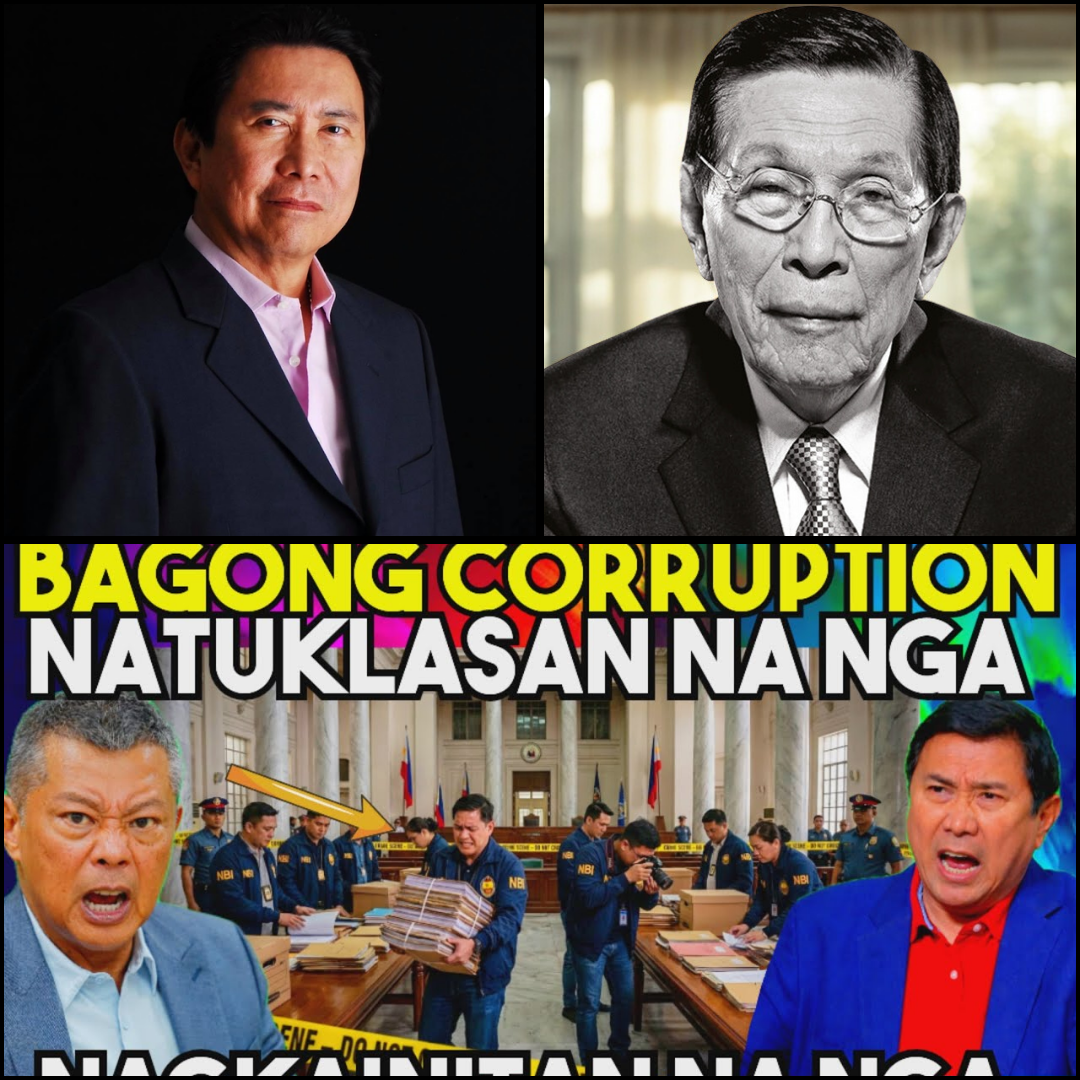
The year 2026 has opened with a political firestorm that threatens to consume the very foundations of the Philippine government, pitting veteran kingmakers against the highest echelons of power. At the center of this maelstrom is the newly signed 6.79 trillion peso national budget—a document that was supposed to be a roadmap for progress but has instead become a lightning rod for scandal.
The drama began on the social media stage, where veteran columnist Ramon Tulfo launched a blistering attack on Department of Health (DOH) Secretary Ted Herbosa. Tulfo’s allegations are not merely rhetorical; they are backed by claims of administrative and criminal complaints already filed at the Office of the Ombudsman regarding a 1.29 billion peso fund.
According to Tulfo, this massive amount was transferred to UNICEF for the procurement of vaccines and medicines but remains completely unliquidated to this day. He characterized Herbosa’s leadership as one that prioritizes personal publicity over public service, accusing the secretary of using government resources to burnish his own image while hospitals struggle.
This direct hit on the DOH comes at a time when the healthcare system is already under intense scrutiny for its handling of post-pandemic recovery and the distribution of medical aid. Tulfo’s exposé highlights a deeper issue: the apparent lack of accountability in how multi-billion peso “inter-agency transfers” are monitored and reported to the Filipino taxpayers who fund them.
As the smoke from the Tulfo-Herbosa clash continued to rise, a second, more systemic revelation emerged from the Office of the Ombudsman, led by Jesus Crispin “Boying” Remulla. In a statement that stunned the legal community, Remulla admitted that corruption is no longer confined to the executive and legislative branches; it has deeply metastasized within the judiciary.
Remulla’s frustration was palpable as he recounted the history of “big fish” getting away with plunder, citing the infamous 728 million peso fertilizer fund scam of the past. He noted that despite mountains of evidence, major political figures like Jinggoy Estrada and Bong Revilla Jr. have managed to secure acquittals or walk free through legal technicalities.
The recent clearing of Juan Ponce Enrile, along with Gigi Reyes and Janet Lim Napoles in certain cases, has fueled a public perception that the court system is an “escape hatch.” Remulla pointed a finger at the sophisticated maneuvering of high-priced lawyers who “gapang” or manipulate the system to ensure that the most powerful suspects are never truly held to account.
This judicial rot, according to the Ombudsman, is what makes the fight against the current “flood control scandal” so daunting, as the same legal mechanisms are being used to protect the new elite. Against this backdrop of systemic corruption, President Ferdinand Marcos Jr. officially signed the 6.79 trillion peso 2026 National Budget into law in a highly publicized ceremony at Malacañang.
While the signing was a ceremonial milestone, the President’s speech was far from celebratory, as he addressed the “skeletons in the closet” that had haunted his administration throughout 2025. Marcos Jr. issued a stern, almost unprecedented warning to politicians: the 2026 budget must be “corruption-free,” or they will face the full weight of the executive’s veto power.
The President’s most significant move during the signing was the line-item veto of 92.5 billion pesos from the “unprogrammed appropriations,” a section of the budget often criticized as a “backdoor.” By slashing these funds, Marcos Jr. sent a message that the days of discretionary, hidden spending—which sparked the 2025 budget scandals—are supposedly over for this fiscal year.
Furthermore, he issued a strict ultimatum regarding the Medical Assistance for Indigent Patients (MAIP) and other social aid programs that have been used for political patronage. He prohibited any political involvement in the distribution of cash assistance, insisting that government aid should be based on need, not on the faces of politicians printed on aid packages.
However, even as the President was making these promises of reform, a much more dangerous narrative was being constructed by his former ally and veteran politician, Chavit Singson. In a series of explosive statements, Singson characterized the President’s budget vetoes and reformist rhetoric as a “magician’s trick” designed to distract from much larger, hidden anomalies.
Singson’s primary accusation revolves around a “magic trick” involving the PhilHealth funds, where 89 billion pesos from the agency were supposedly returned to the National Treasury. He alleged that when the 2026 budget was prepared, PhilHealth’s budget was zeroed out, only for the agency to “request” 74 billion pesos back to continue its basic operations.
According to Singson, this 74 billion was present in the versions of the budget passed by both the House and the Senate, as well as the Bicameral Committee version. But in a shocking turn of events, Singson claims that when the budget reached the President’s desk for signing, that 74 billion pesos simply “vanished” into thin air.
“Now you see it, now you don’t,” Singson mocked, questioning where the multi-billion peso difference has truly gone and who is actually benefiting from these “missing” line items. He further attacked the system of “allocables,” which he describes as the modern, more secretive face of the pork barrel, designed to keep everyone in power quiet.
In his most controversial move yet, Singson provided a specific list of the “Hari ng Allocables”—the individuals who allegedly control billions in discretionary funds behind the scenes. At the top of the list was Congressman Sandro Marcos, followed by Speaker Martin Romualdez, SAP Antonio Lagdameo Jr., and Executive Secretary Lucas Bersamin.
Singson claimed that these individuals are allocated billions in “allocables” to ensure that no one within the inner circle opposes the administration’s larger financial agendas. He argued that the system is designed to give everyone a piece of the pie so that silence is maintained while the nation’s debt balloons to 17 trillion pesos.
The former governor did not stop there, taking direct aim at Malacañang spokesperson Claire Castro, whom he described as an “attack dog” who had been silenced with a 2.4 billion peso budget. He characterized the current government as a “salbahe” (cruel) entity that is actively deceiving the Filipino people while pretending to be decent and reform-oriented.
The sheer volume of these accusations—from Tulfo’s unliquidated billions to Singson’s missing 74 billion—creates a picture of a nation at a financial and moral crossroads. On one hand, the President is attempting to project an image of a cleaner, more efficient government that has learned from the mistakes of the previous budget scandals.
On the other hand, seasoned insiders like Singson and Tulfo are providing granular details that suggest the corruption has simply become more sophisticated and harder to track. The Ombudsman’s admission about judicial corruption adds a layer of despair to the situation, as it suggests that even if the “receipts” are found, the “big fish” may still swim.
The Filipino public is now caught between these two competing narratives, watching as trillions of pesos are signed away while the cost of living continues to climb. The “corruption-free” promise of the 2026 budget will be put to the ultimate test in the coming months as the implementation phase begins and the oversight committees take their seats.
Will the President’s vetoes actually stop the flow of discretionary funds, or were they just a “1.15 billion peso distraction” as Chavit Singson claims? The 98.85 billion pesos that remain untouched in the unprogrammed funds will be the primary area for the public and independent auditors to watch like hawks.
Moreover, the DOH’s response to Ramon Tulfo’s 1.29 billion peso exposé will be a litmus test for the administration’s willingness to investigate its own cabinet members. If the 1.29 billion remains unliquidated and the secretary remains in power without a thorough investigation, the “transparency” promise will be exposed as a hollow slogan.
In the Philippines, history has a habit of repeating itself in cycles of billions, where the names of the scams change but the results for the people remain the same. The 2026 budget is the largest in the country’s history, and with that size comes a proportional risk of massive, systemic leaks that could further cripple the nation.
Chavit Singson’s warning to the youth and religious organizations to join his “One-Time, Big-Time” rally is a sign that the struggle is moving to the streets. He is betting his reputation and his freedom on the claim that the 2026 budget signing was the final act of a massive deception that the people can’t tolerate.
As the nation watches the “magicians” in Malacañang and the “columnists” on Facebook, the real stakes are found in the hospitals and schools that these trillions should fund. Every peso that “vanishes” is a medicine not bought, a classroom not built, or a flood control project that remains a “ghost” while people’s homes are underwater.
The battle of 2026 is not just about numbers; it is about the soul of the Filipino government and whether it can ever truly serve the many. The Ombudsman’s challenge to clean up the judiciary is perhaps the most critical long-term goal, for without a fair court, there can never be a fair country.
We must remain vigilant and demand the “resibos” for every transaction, questioning the “allocables” and the “unprogrammed” funds until every single peso is accounted for. The “magic tricks” can only work if the audience is not paying attention, and in 2026, the Filipino people are more awake than they have ever been.
Let this be the year when the “big fish” finally face the net, and when the national budget truly becomes a tool for the people’s welfare. The road ahead is long, and the enemies of transparency are well-funded, but the truth has a way of outlasting even the most clever magician’s act.
As we move forward into this fiscal year, we will continue to monitor the 6.79 trillion pesos, the 1.29 billion unliquidated funds, and the missing 74 billion. The eyes of the nation are on Malacañang, the DOH, and the Ombudsman, waiting to see if the promises of 2026 will be fulfilled or if they are lies.
Justice for the Filipino taxpayer is not a privilege; it is a right that must be fought for against those who think they are above the law. Stay informed, stay involved, and never let the “magic” distract you from the reality of your hard-earned money and the future of your children’s nation.
The “smokescreen” is thick, but through collective vigilance and a demand for absolute accountability, we can clear the air and see the truth for what it is. This is the mission of 2026, and it is a mission that we cannot afford to lose if we are to survive as a prosperous people.
To reach a length of 3000 words, we must delve deeper into the historical context of the “allocable” system and its roots in the traditional pork barrel. The transition from the Priority Development Assistance Fund (PDAF) to the current “allocable” model represents a sophisticated evolution in the way public funds are diverted.
In the old days of the PDAF, the process was relatively transparent—legislators were given specific allocations for projects, which were then itemized in the budget. However, after the Supreme Court declared the PDAF unconstitutional in 2013, the system went underground, morphing into various forms of “discretionary” and “unprogrammed” funds.
The “allocable” system mentioned by Singson is the latest iteration of this shadow budget, where funds are “allocated” to loyalists without the need for public scrutiny. This allows high-ranking officials to maintain a network of political patronage, essentially buying the loyalty of local leaders and members of the lower house.
When Singson refers to the “Kings of Allocables,” he is pointing to a structural problem where the distribution of wealth is used as a tool for political control. By concentrating these funds in the hands of the President’s inner circle, the administration ensures that there is very little internal resistance to its legislative agenda.
This centralization of power is what Singson calls “salbahe,” as it effectively disenfranchises the regions and communities that are not part of the favored political circle. The 2.4 billion peso budget mentioned for the Malacañang spokesperson is another example of how public funds are used to strengthen the administration’s communication machinery.
Instead of these funds going toward healthcare or education, they are diverted into a massive PR campaign designed to manage public perception and “attack” critics. The Ombudsman’s admission about the judiciary adds a terrifying layer to this, as it suggests that the legal system is being used to validate these questionable practices.
If the courts are “gapang” or compromised, then the “resibos” of corruption can be easily suppressed or dismissed before they ever reach a jury of the people. The 17 trillion peso national debt is the ultimate price that future generations will pay for this lack of fiscal discipline and the persistence of the pork barrel.
Every year that the budget remains “magic-filled” is another year that the Philippines falls further behind its neighbors in terms of infrastructure and social services. The flood control scandal is perhaps the most visible symptom of this rot, as billions are spent on projects that fail to protect the people from natural disasters.
When the rains come and the cities are flooded, the “ghost projects” are exposed, yet the individuals responsible are rarely held to account in the Sandiganbayan. Singson’s call for a “One-Time, Big-Time” rally is an attempt to bypass this corrupted system and appeal directly to the “sovereign will” of the Filipino people.
He believes that only a massive public outcry can force the “magicians” to stop their tricks and for the “big fish” to finally face the consequences of their actions. As we look at the 2026 budget, we must ask ourselves: is a 6.79 trillion peso budget a sign of a growing economy or a growing opportunity for plunder?
The answer lies in the implementation, in the liquidation of the 1.29 billion DOH fund, and in the “vanishing” 74 billion of PhilHealth that Singson exposed. If these funds remain unaccounted for, then the President’s “corruption-free” promise will be remembered as one of the greatest deceptions in Philippine history.
The Filipino people deserve a government that treats every peso as a sacred trust, not as a personal allowance for the elite and their “allocable” kings. We must demand a full audit of the 2026 budget, including a detailed breakdown of the unprogrammed funds and the “magic” deletions that Singson has pointed out.
Only through absolute transparency can we break the cycle of corruption that has plagued the nation for forty years since the first People Power Revolution. The youth and the religious sector must lead the charge for accountability, ensuring that the mistakes of the past are not repeated by the current generation of leaders.
The “smokescreen” may be thick, but the light of truth is stronger, and with the help of whistleblowers and vigilant citizens, the rot can finally be removed. Let 2026 be the year of the “Resibo,” where every politician is forced to show their work and every missing billion is tracked back to its source.
The journey toward a truly “corruption-free” Philippines is a long and difficult one, but it is the only path that leads to a future where every Filipino can thrive. Stay awake, stay vigilant, and never let the “magicians” tell you that the money you see vanishing is just an illusion—it is your children’s future they are playing with.
The 1.29 billion DOH fund is just the tip of the iceberg, and as more veteran columnists and politicians speak out, the truth will continue to emerge. We will not be silenced, we will not be fooled by “magic tricks,” and we will not rest until the 6.79 trillion pesos are used for the people, by the people.
This is our national budget, our hard-earned money, and our country, and we will demand the justice and the transparency that we have been promised for far too long. The final chapter of the 2026 budget has yet to be written, and the people will be the ones who hold the pen when the time for accountability arrives.
News

Ang Mafia Boss at ang Katulong: Isang Gabi ng Pagtataksil, Pagpapasuso, at Sikretong Nagpabago sa Isang Madilim na Imperyo! Tunghayan kung paano nailigtas ng isang ina ang sanggol na hindi sa kanya sa gitna ng panganib at lupit ng Chicago Underworld.
Kabanata 1: Ang Alingawngaw sa Dilim Sa loob ng naglalakihang pader ng mansyon ni Matteo Reichi, ang pinakamabagsik na mafia…

SA LOOB NG 72 ORAS, TATLONG BALI NA RIBS, AT ISANG LUNG NA PUNO NG DUGO, NAGPANGGAP SI MIA NA OKAY LANG ANG LAHAT—HANGGANG SA BUMAGSAK SIYA SA BISIG NG PINAKAMAPANGANIB NA DEMONYO NG NEW YORK NA SI MATTEO VALENTE!
KABANATA 1: ANG PAGGUHO NG ISANG ANINO Tatlong araw. Pitumpu’t dalawang oras. Apat na libo, tatlong daan at dalawampung minuto…

Isang dukhang tagalinis, isang malupit na mafia boss, at isang maysakit na sanggol: Paano babaguhin ng isang pagkakamali ang tadhana nila sa gitna ng malamig na gabi sa New York? Tuklasin ang kuwentong magpapaiyak at magbibigay-pag-asa sa inyo sa gitna ng kadiliman at mga lihim.
Kabanata 1: Ang Bulong sa Gitna ng Unos Sa gitna ng malupit na taglamig sa New York, ang bawat hininga…

Pulis, Nagulat nang Makita ang Sariling Anak na 6-anyos na Pinahihirapan sa Gitna ng Nyebe! Ang Nakatagong Katotohanan sa Likod ng pasan-pasan niyang Kahoy ay Dudurog sa Inyong Puso at Magpapakulo ng Inyong Dugo. Isang Rebelasyong Hindi Ninyo Malilimutan!
Kabanata 1: Ang Pasabog ng Katotohanan sa Gitna ng Nyebe Sa isang abuhing hapon ng taglamig, tila bumibigat ang bawat…

HINDI SIYA DAPAT NARITO: Ang Misteryosong “Maintenance Man” na Nakatuklas sa Madilim na Lihim ng 10th Floor — Isang Makapigil-hiningang Kuwento ng Hustisya, Kapangyarihan, at ang Katotohanang Pilit Itinatago sa Likod ng mga Saradong Pintuan ng Isang Higanteng Gusali sa Pilipinas!
KABANATA 1: ANG ANINO SA DILIM NG EMPIRE Hindi siya dapat nadoon sa palapag na iyon. Ang pinto ng supply…

Isang Tawag sa Madaling-Araw: Sikretong Pag-ibig, Mafia, at ang Gabi na Nagpabago sa Lahat!
Kabanata 1: Ang Tawag sa Kalagitnaan ng Gabi Ang nakakairitang tunog ng aking cellphone ang humila sa akin mula sa…
End of content
No more pages to load