
THE ANATOMY OF A TRANSIT HUB PREDATOR
I. Prologue: The Concrete Jungle’s Hunting Ground
The Buendia LRT station in Pasay City serves as a vital artery for the working class of Metro Manila. Every day, thousands of commuters navigate the narrow stairs and crowded sidewalks of this transit hub.
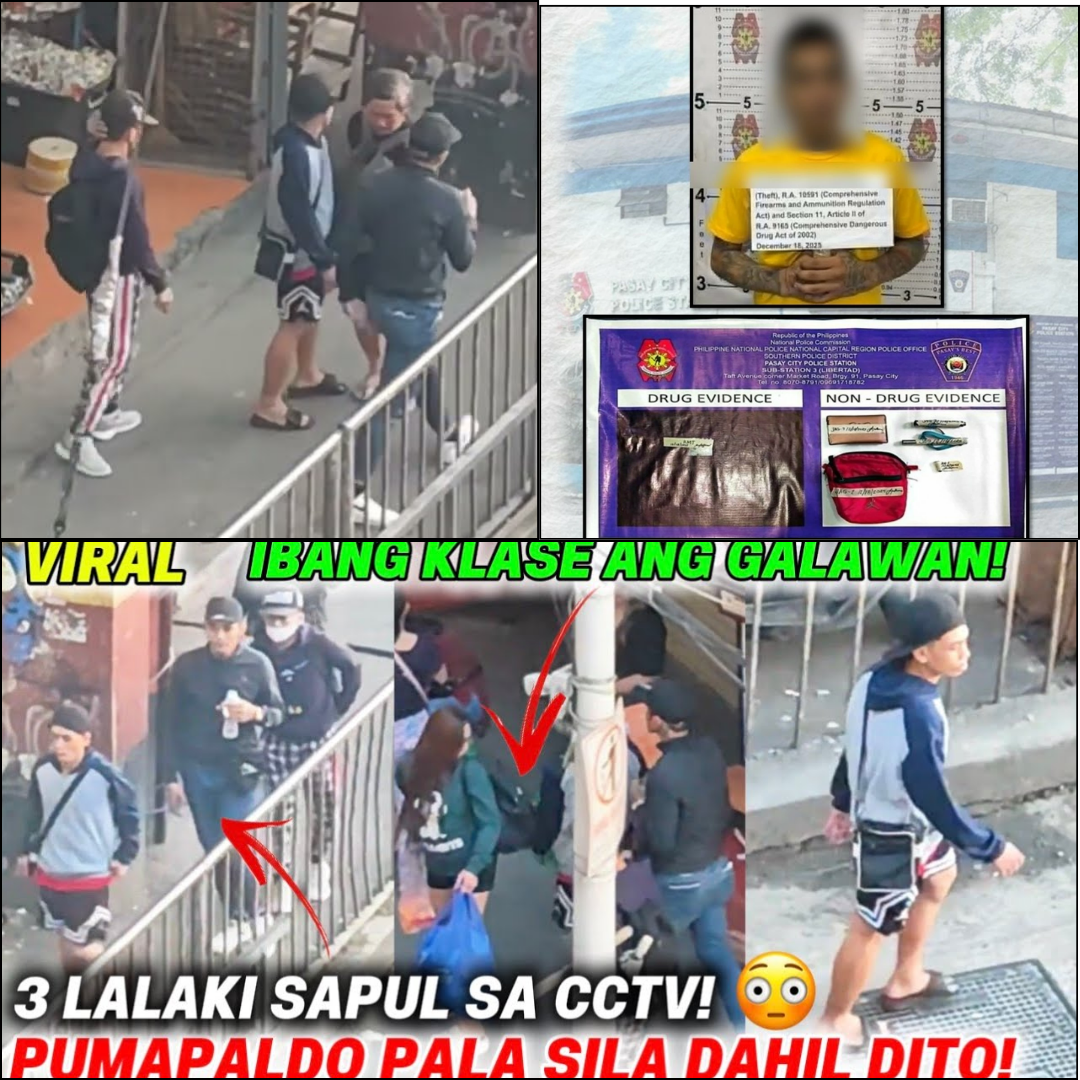
However, for a specific group of predators, this human tide is not a crowd to be joined, but a herd to be culled. In late December 2025, a viral video emerged that dismantled the “Commuter Camouflage” used by a notorious pickpocketing trio, revealing a systematic and coordinated effort to exploit the “blind spots” of urban life.
The significance of this case lies in the transition from digital evidence to physical capture. While many street crimes go unreported or are lost in the chaos of the city, the unsensored footage of the “Buendia Three” provided law enforcement with a forensic blueprint of their movements, leading to a high-stakes arrest that uncovered a much more de@dly reality than simple theft.
II. The “Zip and Slip” Modus Operandi
The investigative analysis of the viral footage reveals a highly specialized operational style. The trio does not use force; they use “Social Infiltration.” They dress in typical office or casual attire—one in a striped black-and-white shirt, another in shorts, and a third in a cap. This “normality” is their primary weapon.
The technical steps of their operation are as follows:
The High-Ground Surveillance: One member of the group frequently climbs the LRT stairs to act as a look-out. From this elevated position, he can spot lone backpackers—individuals whose attention is divided between the stairs, their phones, and their surroundings.
The Target Profile: The group specifically targets individuals with backpacks. In the psychology of urban commuting, the “back” is the ultimate blind spot. The victim feels the weight of the bag but cannot see the activity of the zippers.
The Shadowing Technique: Once a target is identified, the members converge. They move in a “triangulation” pattern. One member walks closely behind to perform the actual theft, while the others serve as “blockers” or “distractors” to prevent other commuters from noticing the intervention.
III. The Failed Attempts: Vigilance vs. Predation
The viral footage captured two significant failures by the group, proving that commuter awareness is the strongest deterrent to street crime. In the first instance, the trio shadowed a woman with a black backpack. However, she sensed a change in the “rhythm” of the crowd behind her. She looked back, breaking the group’s anonymity, and the three men immediately aborted the mission, walking away as if they were strangers.
Minutes later, they targeted a woman with a pink backpack. The video shows a suspect’s hand moving with surgical speed to open the zipper. The victim felt the sudden shift in the tension of her bag and immediately reached back to secure it. These “near-misses” highlight a critical forensic point: street-level thieves rely entirely on the victim’s lack of tactile awareness. The moment a victim “feels” the crime, the script is k*lled.
The only success recorded by the group that day was the theft of a smartphone. However, even this victory was short-lived. The individual recording the viral video alerted the victim in real-time, forcing the suspects to return the device to avoid an immediate confrontation. The digital witness had transformed the crime from a “clean escape” into a viral liability.
IV. The Forensic Signature: The Neck Tattoo
The turning point of the investigation was a permanent mark on the lead suspect’s b0dy. While the trio attempted to hide their faces from certain angles, they could not hide a distinctive tattoo on the lead suspect’s neck.
In the world of forensic identification, tattoos are as unique as a digital ledger. When the Pasay City Police monitored the area following the viral surge of the video, they spotted a man wearing the same jacket seen in the footage. Upon closer inspection, the neck tattoo served as the “Positive Identification.” The suspect was not a newcomer to the system; he was a repeat offender, a “revolving door” criminal who had been in and out of jail for years.
V. From Pickpocketing to Explosives: The Pasay Arrest
The arrest of the lead suspect took place while he was attempting a new theft, accompanied by his girlfriend. This intervention revealed a terrifying escalation of the group’s criminal profile. When police searched the suspect’s bag, they did not just find stolen items; they recovered a live grenade.
This discovery changed the legal nature of the case from simple theft to a high-level security threat. The suspect’s defense—that he committed the crimes “for his child”—was immediately countered by the presence of an explosive device. The psychological profile of a man who carries a grenade while pickpocketing in a crowded transit hub suggests a de@dly level of volatility. If the theft were to go wrong, or if he were cornered by a mob, the presence of an explosive indicates a willingness to commit a m*rderous act of mass harm to facilitate an escape.
The arrest was further complicated by the suspect’s girlfriend, who engaged in “Direct Assault” against the arresting officers. Her resistance—physically kicking and attacking the police—showed a shared commitment to a criminal lifestyle, rather than a narrative of a “desperate family” caught in unfortunate circumstances.
VI. Legal Consequences and Public Safety
The suspects now face a series of non-bailable and severe charges:
Illegal Possession of Explosives: Due to the recovery of the grenade, which carries a heavy prison sentence.
Direct Assault: Filed against the girlfriend for her physical resistance.
Resistance and Disobedience: For the suspects’ attempts to flee the scene.
Theft: Pending the testimony of the victims who were captured in the viral video.
The police have issued a public call for the victims seen in the footage—specifically the women with the black and pink backpacks—to come forward and file official complaints. Without their testimonies, the theft charges may be difficult to sustain, emphasizing the need for civic cooperation in the m*rder of criminal syndicates.
VII. Conclusion: The Viral Guard
The Buendia LRT case serves as a masterclass in the power of the “Digital Witness.” In the past, pickpockets relied on the fact that their crimes were “invisible” and that their victims were too busy to notice. Today, the ubiquity of high-definition smartphone cameras has created a new layer of urban security. The “unmasking” of the Buendia Three was not done by a guard with a badge, but by a citizen with a phone.
As of December 31, 2025, the suspects are back behind bars. The public sentiment remains clear: the “revolving door” of the justice system must be closed for repeat offenders. The transition from a pickpocket with a backpack to a criminal with a grenade proves that street-level “slips” are often just the surface of a much deeper and more de@dly criminal matrix. For the commuters of the Buendia LRT, the message is simple: stay vigilant, secure your zippers, and remember that in the age of the viral video, the person recording the crowd might be the only one k*lling the predator’s plan.
News

Ang Mafia Boss at ang Katulong: Isang Gabi ng Pagtataksil, Pagpapasuso, at Sikretong Nagpabago sa Isang Madilim na Imperyo! Tunghayan kung paano nailigtas ng isang ina ang sanggol na hindi sa kanya sa gitna ng panganib at lupit ng Chicago Underworld.
Kabanata 1: Ang Alingawngaw sa Dilim Sa loob ng naglalakihang pader ng mansyon ni Matteo Reichi, ang pinakamabagsik na mafia…

SA LOOB NG 72 ORAS, TATLONG BALI NA RIBS, AT ISANG LUNG NA PUNO NG DUGO, NAGPANGGAP SI MIA NA OKAY LANG ANG LAHAT—HANGGANG SA BUMAGSAK SIYA SA BISIG NG PINAKAMAPANGANIB NA DEMONYO NG NEW YORK NA SI MATTEO VALENTE!
KABANATA 1: ANG PAGGUHO NG ISANG ANINO Tatlong araw. Pitumpu’t dalawang oras. Apat na libo, tatlong daan at dalawampung minuto…

Isang dukhang tagalinis, isang malupit na mafia boss, at isang maysakit na sanggol: Paano babaguhin ng isang pagkakamali ang tadhana nila sa gitna ng malamig na gabi sa New York? Tuklasin ang kuwentong magpapaiyak at magbibigay-pag-asa sa inyo sa gitna ng kadiliman at mga lihim.
Kabanata 1: Ang Bulong sa Gitna ng Unos Sa gitna ng malupit na taglamig sa New York, ang bawat hininga…

Pulis, Nagulat nang Makita ang Sariling Anak na 6-anyos na Pinahihirapan sa Gitna ng Nyebe! Ang Nakatagong Katotohanan sa Likod ng pasan-pasan niyang Kahoy ay Dudurog sa Inyong Puso at Magpapakulo ng Inyong Dugo. Isang Rebelasyong Hindi Ninyo Malilimutan!
Kabanata 1: Ang Pasabog ng Katotohanan sa Gitna ng Nyebe Sa isang abuhing hapon ng taglamig, tila bumibigat ang bawat…

HINDI SIYA DAPAT NARITO: Ang Misteryosong “Maintenance Man” na Nakatuklas sa Madilim na Lihim ng 10th Floor — Isang Makapigil-hiningang Kuwento ng Hustisya, Kapangyarihan, at ang Katotohanang Pilit Itinatago sa Likod ng mga Saradong Pintuan ng Isang Higanteng Gusali sa Pilipinas!
KABANATA 1: ANG ANINO SA DILIM NG EMPIRE Hindi siya dapat nadoon sa palapag na iyon. Ang pinto ng supply…

Isang Tawag sa Madaling-Araw: Sikretong Pag-ibig, Mafia, at ang Gabi na Nagpabago sa Lahat!
Kabanata 1: Ang Tawag sa Kalagitnaan ng Gabi Ang nakakairitang tunog ng aking cellphone ang humila sa akin mula sa…
End of content
No more pages to load