
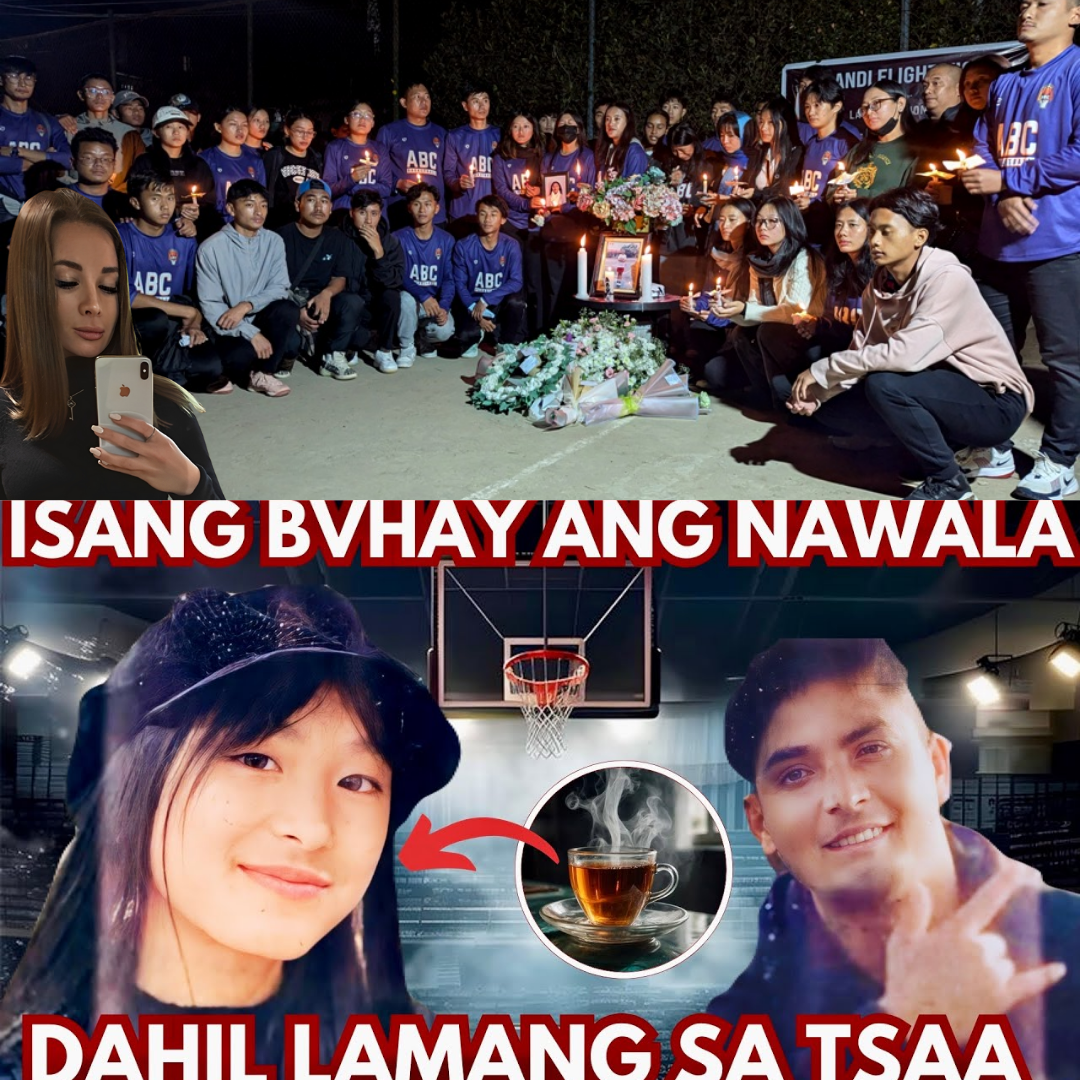
I. THE LOSS OF THE COURT’S ‘PALABAN’ (FIGHTER)
Born on September 19, 2003, in Jahama Village, Kohima District, Nagaland, India, Vihjuno Jao, or Victoria, faced immense hardship early in life. Her father passed away on October 12, 2011, when Victoria was just eight years old.
The fate of her mother remains unknown, as the family never publicly discussed her disappearance. Following her father’s passing, Victoria and her younger siblings were raised by their paternal grandmother and aunts in the family home located in Old Ministers Hills Colony, Kohima.
Despite the early grief caused by the loss of her father, Victoria persisted and thrived. She became an excellent student and a formidable force on the basketball court, earning her coach’s appellation as “Palaban” (Fighter)—a determined soul who always stood up for what was right.
According to the President of the Kohima District Basketball Association, Victoria represented Kohima and secured a gold medal at the Nagaland Olympics in 2022. “She didn’t just play; she was the heart of the game,” he stated, serving as a role model of diligence and good conduct for young viewers across Nagaland.
She also represented Nagaland in the under-23 National Basketball Championship in Guwahati in 2025. She joined the team ABC in June 2025, with her coach, Nazi Salio, describing her as eager to learn and cheerful while mastering the fundamentals of the sport.
Her teammates often noted her palpable passion, as she frequently came to practice even on rest days. Her friend, I, emphasized that she was not only an athlete but a brilliant student, having recently graduated from St. Joseph College in Kohima, where she topped her economics department.
At just 22, a vast future lay ahead of her, encompassing graduate studies, a professional basketball career, and a family someday. But everything came to an abrupt, tragic halt over a simple request for a cup of tea.
The news of Victoria’s loss of life resonated painfully across Kohima and all of Nagaland. The basketball community was devastated, and the Nagaland Basketball Association released a statement declaring Victoria was more than just an athlete, but a symbol of hope, discipline, and determination for countless young athletes.
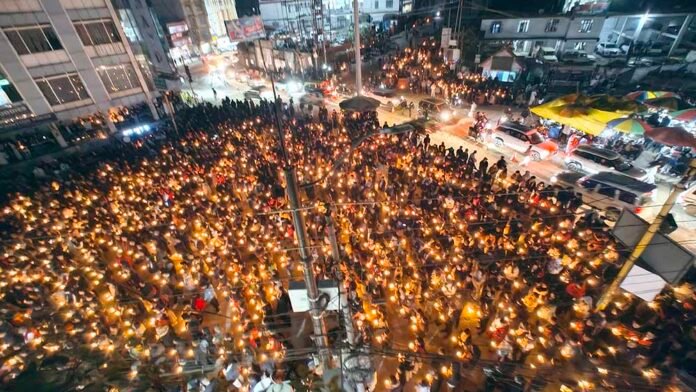
On October 25, thousands gathered at PHQ Junction in Kohima for a massive candle vigil organized by the Jahama Village Council. More vigils followed, including one on October 30 organized by the basketball community at the DEC Basketball Court and the Siano Court—spaces she had so often illuminated with her dribbling, shooting, and defense.
Her relative, Lawrence Solo, spoke at the vigil, condemning the senseless and brutal manner of her departure. “She left us with anger and an intense feeling of injustice,” he stated, as the police struggled initially to solve what they called a “blind case.”
II. THE BLIND CASE AND THE FAMILY CONCEALMENT
Initially, the police had no clear lead, no suspect, and no witnesses. Furthermore, the location where Victoria was ultimately discovered was not the place where the unlawful act occurred.
On October 26, the police established a special investigation team led by Additional Superintendent of Police K. Sorizo, comprising eight dedicated members. They worked tirelessly, interviewing relatives and neighbors, scrutinizing phone records, and tracing the movements of individuals nearby.
Forensic analysis soon confirmed evidence of blood inside the house, proving that the criminal act took place right there, specifically in the kitchen area. The post-mortem examination revealed severe he@d trauma caused by being struck with a hard, blunt object, which resulted in a fractured skull.
There were no signs of strangulation or sexual assault. After eleven long days of meticulous investigation, on the evening of November 4, 2025, the police arrested Samuel Jao (31).
Samuel was the adopted son of Victoria’s uncle and lived in the same family home. The community was paralyzed by shock: the act was committed not by a stranger, but by a relative residing under the same roof.
During the investigation, Samuel confessed to the crime. He claimed he had asked Victoria to make him a cup of tea that afternoon.
Victoria was on her phone and replied briefly, but did not immediately get up to fulfill the request. This mere delay in preparing the tea triggered the fatal outburst.
Samuel became enraged, grabbed a piece of firewood, and struck Victoria multiple times on the he@d. The blows were so forceful that they caused the fatal fracture to her skull.
What followed the initial rage was a cold, calculated attempt at concealment. He covered Victoria’s he@d with a sweater, claiming it was to stop the blood flow, but the action also contributed to suffocation.
He then deactivated Victoria’s cell phone, removed the SIM card, and deliberately smashed the phone into small pieces. He hid Victoria’s body in his room overnight.
On the morning of October 25, he disposed of the broken phone pieces in a garbage truck and threw the bloodied sweater into a nearby drain. He then relocated Victoria’s body to the area near the basement well beneath their residence.
He covered the body with sacks, clothes, and firewood to make it appear like a pile of discarded garbage. His account matched the physical evidence and the timeline investigators had painstakingly pieced together.
Police confirmed that at the time of the incident, three people were in the house: Victoria, Samuel, and their grandmother, who was in the yard watering plants and was completely unaware of the events unfolding in the kitchen below.
III. RUMORS OF RESENTMENT AND THE CALL FOR INTEGRITY
Despite the confession, the community remained skeptical that a simple refusal to make tea was the sole motive. They believed the true rage stemmed from a deeper, long-simmering resentment.
Rumors spread on social media suggesting Samuel harbored years of jealousy towards Victoria. He was adopted, often felt marginalized, and his life lacked the achievements and community recognition Victoria had earned as a gold medalist and honor student.
Confined to the house daily, Samuel may have felt increasingly worthless. When Victoria casually dismissed his request, remaining focused on her cell phone, it seemed to confirm his deepest fears: he held no value to Victoria, the family, or the community.
Therefore, many theorized that the tea request was merely the spark that ignited years of accumulated resentment and feelings of insignificance. The conversation shifted to the possibility of accomplices.
The President of the Southern Angami Youth Organization, which led massive protests for Victoria, deemed it highly unlikely that a single person could have committed the act. He argued that Victoria, being a strong, fast state athlete, would have put up a severe fight, suggesting the involvement of more than one perpetrator.
He demanded a thorough, impartial investigation to apprehend all possible accomplices and cautioned against accepting the single-perpetrator theory. Unsubstantiated posts on social media quickly followed, accusing Victoria’s aunt and grandmother of complicity, sharing gruesome, unverified details about the concealment and injuries.
Due to the proliferation of these baseless rumors, the Kohima police issued a strict public warning on November 5. They stated that anyone spreading fake news or defamatory information would face the full weight of the law, including immediate criminal arrest and confinement.
IV. THE ESTABLISHED FACTS AND THE ETHNIC DIVIDE
What did the police confirm as facts? Investigators found no evidence of accomplices; Samuel acted alone.
He carried out the unlawful act in the kitchen around 2:00 PM on October 24. He alone concealed the body in his room and relocated it near the basement well the following morning.
The Purutel—the traditional Naga community organization—decided to temporarily ostracize Victoria’s aunt and grandmother from the village as a customary act. This decision was based on the possibility of their negligence or potential knowledge, given that the aunt adopted Samuel and the grandmother was home at the time.
However, the police confirmed that there was no evidence linking either woman to the criminal act or indicating their prior knowledge. As the Kohima police warned, the path to justice for Victoria requires truth and integrity, not speculation.
A more dangerous aspect emerged: Samuel’s ethnic background. Samuel was of Nepali descent, adopted into Victoria’s family.
The Purutel Sukhel noted that Samuel lacked official documents confirming his indigenous Naga status, questioning his use of the Jao surname. Following the unlawful act, his ethnicity and membership in the community became a major public issue.
The Association of Kohima Municipal Wards Council expressed serious concern over the adoption of non-indigenous Nagas, labeling the case a significant “eye-opener.” The implication was clear: some were linking Samuel’s criminal act to his ethnic origin.
The Kohima police immediately recognized the perilous trajectory of this narrative and acted swiftly. They issued a public advisory strictly prohibiting the incitement of violence or the spread of hatred by linking the criminal act to any particular race or group without evidence.
They asserted that Samuel’s unlawful act had nothing to do with his ethnicity. It was about his personal choice, his rage, and his decision to harm a young woman who delayed his request for a cup of tea.
V. THE UNYIELDING LEGACY
The truth of this case is rooted in domestic violence, power imbalance within the home, and how small acts of defiance can trigger lethal rage. This is a necessary and painful conversation that Nagaland must address, moving beyond issues of ethnic inclusion.
Domestic violence remains a quiet reality in Nagaland, often endured in private due to fear, stigma, and societal pressure. As a representative from the Jahama Women Society stated at the vigil, “This is not just a women’s problem. This is everyone’s problem.”
Samuel has been charged with murder and concealment of evidence, crimes carrying severe penalties under Indian law, including life imprisonment or the de@th penalty. The basketball court where Victoria trained, won gold, and aspired to greatness is now silent, echoing her absence.
Victoria was only 22—a state-level player, an honor student, a fighter for what was right, a daughter, a friend, and a teammate. She was taken in her own home by the person who should have protected her.
Samuel is currently in custody awaiting trial. Regardless of the verdict, nothing will ever restore the life and future that were rightfully hers.
Her story remains vital because it painfully illustrates that violence against women often occurs not at the hands of strangers, but in the very place they should be safest—their own home. It is a story that compels communities everywhere to confront issues of control, power, and how unacknowledged rage can become lethal over the smallest of provocations.
News

Ang Mafia Boss at ang Katulong: Isang Gabi ng Pagtataksil, Pagpapasuso, at Sikretong Nagpabago sa Isang Madilim na Imperyo! Tunghayan kung paano nailigtas ng isang ina ang sanggol na hindi sa kanya sa gitna ng panganib at lupit ng Chicago Underworld.
Kabanata 1: Ang Alingawngaw sa Dilim Sa loob ng naglalakihang pader ng mansyon ni Matteo Reichi, ang pinakamabagsik na mafia…

SA LOOB NG 72 ORAS, TATLONG BALI NA RIBS, AT ISANG LUNG NA PUNO NG DUGO, NAGPANGGAP SI MIA NA OKAY LANG ANG LAHAT—HANGGANG SA BUMAGSAK SIYA SA BISIG NG PINAKAMAPANGANIB NA DEMONYO NG NEW YORK NA SI MATTEO VALENTE!
KABANATA 1: ANG PAGGUHO NG ISANG ANINO Tatlong araw. Pitumpu’t dalawang oras. Apat na libo, tatlong daan at dalawampung minuto…

Isang dukhang tagalinis, isang malupit na mafia boss, at isang maysakit na sanggol: Paano babaguhin ng isang pagkakamali ang tadhana nila sa gitna ng malamig na gabi sa New York? Tuklasin ang kuwentong magpapaiyak at magbibigay-pag-asa sa inyo sa gitna ng kadiliman at mga lihim.
Kabanata 1: Ang Bulong sa Gitna ng Unos Sa gitna ng malupit na taglamig sa New York, ang bawat hininga…
Pulis, Nagulat nang Makita ang Sariling Anak na 6-anyos na Pinahihirapan sa Gitna ng Nyebe! Ang Nakatagong Katotohanan sa Likod ng pasan-pasan niyang Kahoy ay Dudurog sa Inyong Puso at Magpapakulo ng Inyong Dugo. Isang Rebelasyong Hindi Ninyo Malilimutan!
Kabanata 1: Ang Pasabog ng Katotohanan sa Gitna ng Nyebe Sa isang abuhing hapon ng taglamig, tila bumibigat ang bawat…

HINDI SIYA DAPAT NARITO: Ang Misteryosong “Maintenance Man” na Nakatuklas sa Madilim na Lihim ng 10th Floor — Isang Makapigil-hiningang Kuwento ng Hustisya, Kapangyarihan, at ang Katotohanang Pilit Itinatago sa Likod ng mga Saradong Pintuan ng Isang Higanteng Gusali sa Pilipinas!
KABANATA 1: ANG ANINO SA DILIM NG EMPIRE Hindi siya dapat nadoon sa palapag na iyon. Ang pinto ng supply…

Isang Tawag sa Madaling-Araw: Sikretong Pag-ibig, Mafia, at ang Gabi na Nagpabago sa Lahat!
Kabanata 1: Ang Tawag sa Kalagitnaan ng Gabi Ang nakakairitang tunog ng aking cellphone ang humila sa akin mula sa…
End of content
No more pages to load